
Teams and artists lose deadlines and energy when formats and approvals circulate across multiple tools. Without a hybrid calendar, versions get lost, revisions pile up, and delivery slows down. The solution is to structure a single workflow for posts, videos, and assets that anticipates decisions and reduces rework. Implementing this requires a clear methodology, templates, and governance—urgently, if you need to scale deliveries without sacrificing quality.
Why hybrid formats require a centralized calendar
Today’s content combines photos, carousels, Reels, long-form videos, and promotional assets that share visual elements and messaging. When these formats are planned in isolation, the team creates multiple competing versions and loses consistency. A centralized calendar maps dependencies between deliverables, approval deadlines, and creative checkpoints. This reduces reshoots and prevents a delay in one format from stalling other related assets.
How to structure the calendar around production cycles
Divide the calendar into weekly and monthly cycles that align briefing, production, editing, and approval. Include fixed milestones such as script lock, edit lock, and the last day for adjustments before publication. Distinguish entries by type (image, short video, long video, static assets) and by the person responsible. This structure makes things more predictable: everyone knows what needs to be ready and when each stage requires review.
Templates and assets that speed up creative decisions
Standardized templates for scripts, briefs, captions, and subtitles reduce validation time and standardize deliverables for reviewers. Pre-approved elements—color palette, typography, visual call to action—make quick approvals easier without repeatedly reviewing every detail. For videos, have export presets and thumbnail guides; for posts, collections of approved variations. These assets reduce friction and make the feedback cycle more objective.
Approval workflows that minimize revisions and rework
Define who approves what and the level of approval required at each stage: creative, technical, and commercial. Use checkpoints with clear deadlines and a rule for the maximum number of revision rounds per stage. Centralize comments in a single tool or document to avoid conflicting versions. With roles and timelines clearly defined, the team cuts down on parallel conversations and speeds up final delivery.
Practical criteria for hiring or managing the calendar in-house
Assess internal capacity based on delivery volume, format diversity, and the maturity of approval processes. Look for suppliers or candidates with proven experience in hybrid production, the ability to create reusable templates, and a methodology for implementing calendars. Require a transition plan that includes mapping responsibilities, team training, and a pilot period with clear targets for reducing turnaround time. If you have questions about contracts, rights, or investments, these depend on the project scope and may require consulting a legal or financial specialist.
Why consider Deal's Art to implement your hybrid calendar
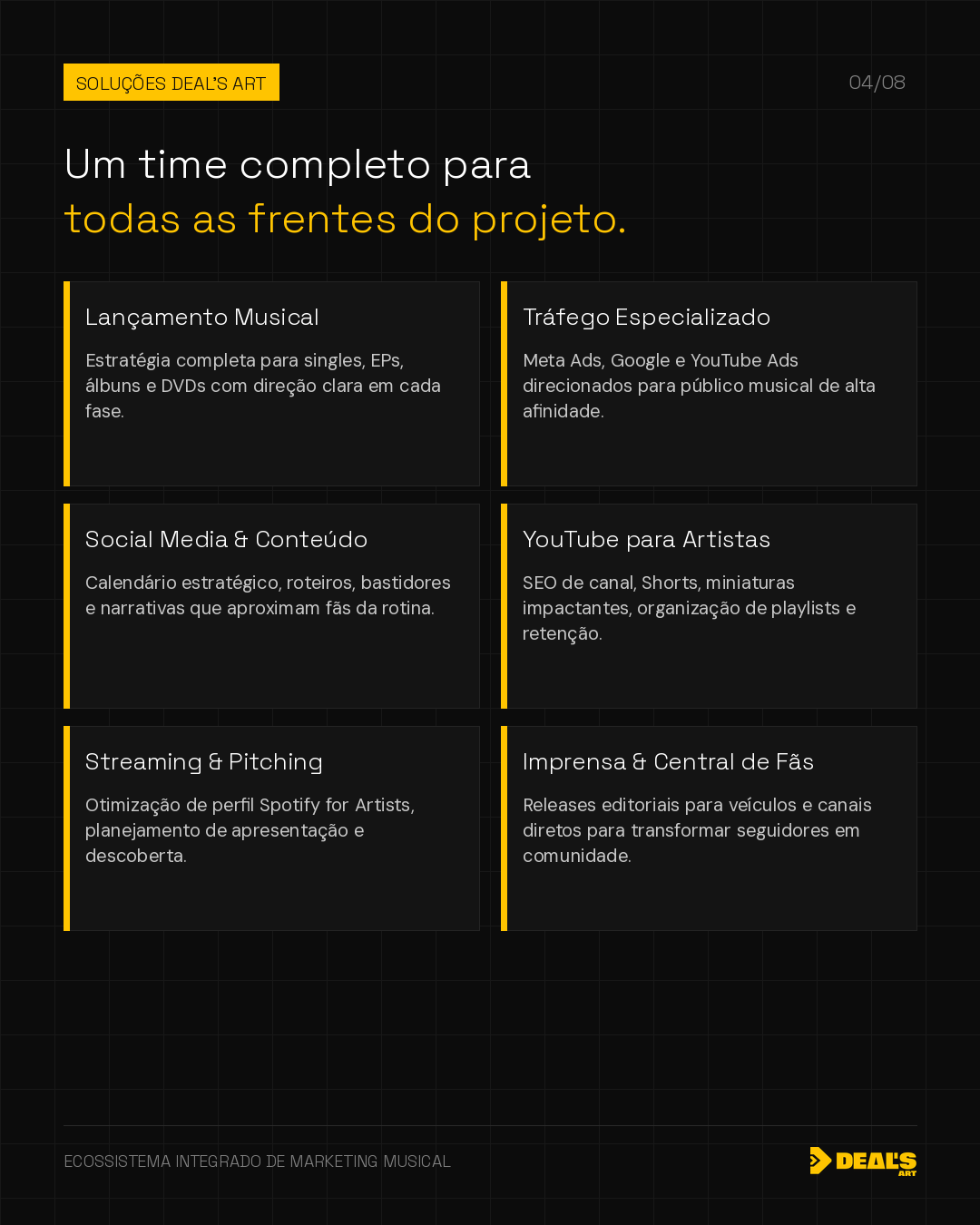
Deal's Art works at the intersection of content strategy and production operations for artists and music teams. We can map your formats, create templates, and implement a calendar that makes approvals faster and more predictable, without promising specific results. If your goal is to reduce bottlenecks and standardize deliverables, a custom proposal will detail the scope, investments, and implementation phases. Get in touch to request a proposal for a calendar and templates and assess how we can operationalize your workflow.
A consistent strategy connects creativity, context, and relationships. If you want to organize your next cycle with an integrated perspective, Deal's Art can help define the project’s priorities.
Present my project