
Accumulating campaigns and ad sets without a naming standard makes it difficult to find tests and learn from the results. Many artists end up repeating audiences and creatives because they lose the history or do not know where the relevant data is. This wastes time and leads to decisions based on superficial impressions. A clear naming system reduces confusion and makes it easier to compare actual tests.
Diagnosing the pain point
When campaigns pile up without a standard, identifying which creative, audience, or objective produced a result means digging through every ad set. Small teams and independent artists have limited resources for this kind of manual investigation. The problem gets worse when trying to replicate a test without knowing which version led to a particular learning. Without organized history, decisions end up relying on vanity metrics instead of useful signals.
The necessary change in approach
The solution is to adopt a naming convention that records the objective, audience, creative, and test version. This change requires initial discipline, but it reduces rework and makes comparisons easier over time. With consistent labels, it is easier to filter reports and separate relevant metrics from vanity metrics. This approach makes it possible to create a clearer, more reproducible testing plan.
What the ebook teaches
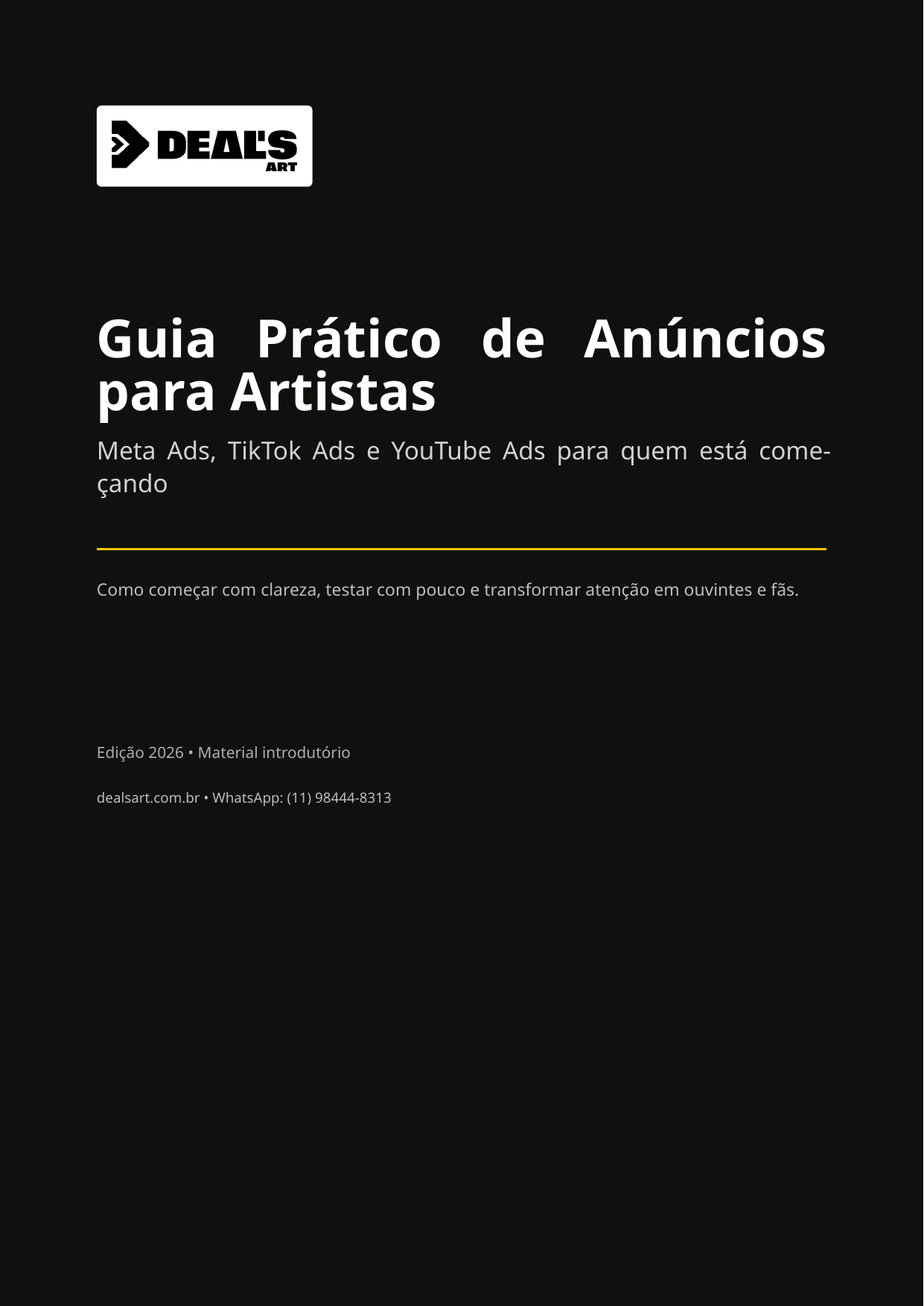
The Practical Advertising Guide for Artists explains concepts in simple language about Meta Ads, TikTok Ads, and YouTube Ads, and shows how to put together a 7-day testing plan. The content focuses on structuring names that indicate the objective, audience, and creative, and on how to interpret results to avoid vanity metrics. There are no miracle promises; the guide offers practical tools to help you organize and analyze campaigns with less confusion.
Practical application
With the guide's naming convention, you can quickly find past tests and compare audiences or creatives across platforms. The proposed structure lets you apply the 7-day testing plan to validate hypotheses and adjust creatives based on useful signals. This reduces the time spent searching for information and helps maintain a history that supports clearer decisions. Results are read by considering the objective, audience, and creative together.
Who this material is for
The Practical Advertising Guide for Artists is designed for independent artists, bands, producers, and small teams managing campaigns on Meta Ads, TikTok Ads, and YouTube Ads. It is useful for those who handle advertising on their own or with little technical support and need to organize their history and tests. It also serves those who want an objective testing plan and want to avoid decisions based only on surface-level metrics. The material uses simple language to make it easier to put into practice.
Conclusion and an honest invitation
If you find it difficult to locate old tests, replicate learnings, or separate relevant metrics, the Practical Advertising Guide for Artists offers specific guidance for organizing names and applying a 7-day testing plan. The guide shows how to prioritize the objective, audience, and creative, and how to read results without getting caught up in vanity metrics. Buying the guide may help save time and make your ads easier to analyze, depending on how you apply the recommendations. Buy the guide to organize your ads.
A consistent strategy connects creation, context, and relationships. If you want to organize your next cycle with an integrated perspective, Deal's Art can help define the project's priorities.
Present my project