
Media often generates visibility, but it does not translate into shows or commercial partnerships. The problem is the lack of a clear workflow between those who secure coverage and those who convert interest into stage opportunities. Without a structured handoff, important mentions become noise and leads go cold. It is essential to create processes that capture, qualify, and activate contacts generated by the press before the window of opportunity closes.
Mapping the touchpoints between press and sales
The first step is to identify where editorial coverage generates commercial value: articles, reviews, interviews, editorial playlists, and mentions in local columns. Each type of mention has a different audience and potential for shows, corporate events, or brand partnerships. Assign people to monitor mentions and initiate the handoff workflow as soon as a qualified contact appears. Recording these touchpoints in a workflow map helps prevent opportunities from being lost due to a lack of follow-up.
Creating a system for capturing and qualifying leads
The press team should feed a single system with raw data: press clippings, journalist contacts, leads originating from articles, and demand signals (invitations, requests for contact). The sales team needs clear criteria for qualifying these leads: source, audience reached, event type, and estimated budget. Use standardized templates to record information and attach relevant links, excerpts, and images. This system reduces duplicate work and speeds up sales responses to inquiries generated by media coverage.
The ideal handoff format: timing, content, and responsibilities
An efficient handoff is fast, contextual, and actionable: a short delay after publication, a summary of the context, and suggested next steps. Set maximum timeframes for each stage—for example, 24 to 48 hours to notify sales about high-potential mentions—and clarify who is responsible for the initial outreach. Include ready-to-use materials in the handoff: an up-to-date press kit, technical rider, streaming links, and show proposals. This enables the sales team to respond to opportunities generated by the press quickly and consistently.
Sales outreach tactics aligned with editorial content
Use the article’s angle to personalize the sales proposal: references mentioned, the article’s tone, and its target audience help shape a more relevant offer. Use positive mentions as an entry point for performances, and critical mentions to open a dialogue and address perceptions before offering shows. Proposals should be brief, with format options (pocket show, showcase, festival appearance, corporate activations) and references to case studies or materials that complement the article. A standardized outreach script maintains quality, even in rapid interactions.
Criteria for hiring or professionally implementing the integration
When hiring a press office or consultant to integrate press and sales, assess their experience with similar artists, documented processes, and use of integrated CRM and press-clipping systems. Check their ability to deliver on short timelines, the quality of the press kit, and their skill in creating sales materials based on editorial coverage. Also assess contractual clarity regarding scope, lead ownership, and confidentiality; in complex cases, specialized legal support is recommended. Ask for process metrics (response time, lead-to-meeting conversion rate) rather than promises of results.
How Deal's Art supports integration without promising results
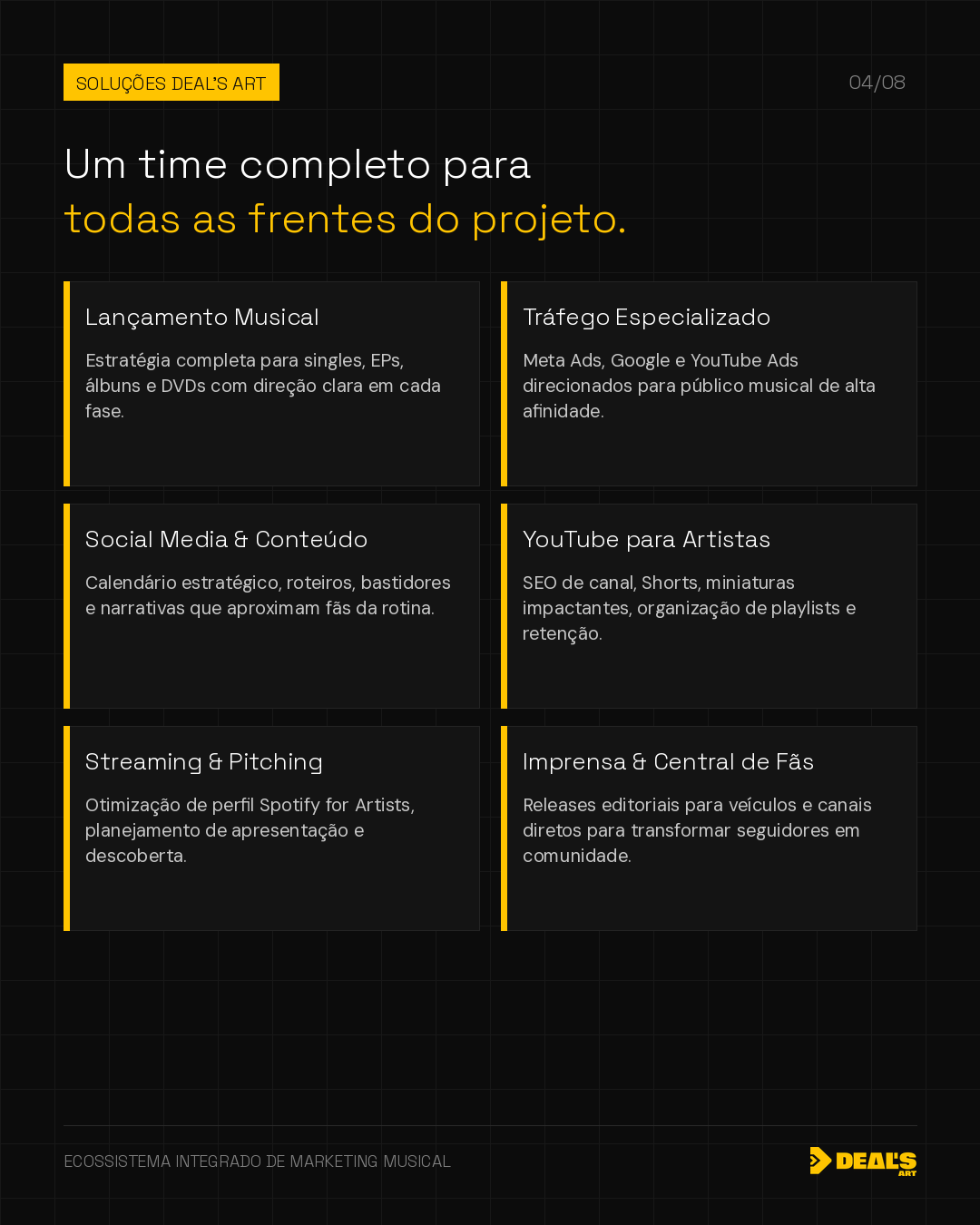
Deal's Art offers structured press services for artists, focused on putting efficient handoffs into practice for sales teams and labels. Our work prioritizes creating processes, materials, and routines that make it easier to capture, qualify, and activate opportunities generated by media coverage. We do not promise guaranteed results, but we provide organization, clear responsibilities, and tools so your sales team can respond quickly and consistently. For specific questions about pricing, contracts, or rights, we can offer guidance and, when necessary, refer you to specialists.
A consistent strategy connects creativity, context, and relationships. If you want to organize your next cycle with an integrated perspective, Deal's Art can help define the project's priorities.
Present my project