
Hiring a music agency without a clear brief means accepting a generic solution to a unique challenge. Many artists, labels, and producers lose time and budget because they do not define their goals, audience, and scope before the first meeting—which increases the risk of misalignment and rework. If you are about to start business discussions, preparing a focused brief now can reduce costs, speed up decisions, and make it easier to compare proposals fairly. Here is a practical guide to putting together an effective brief and choosing the right agency for music marketing and release planning.
Clearly define the project's objective
Start by describing what you hope to achieve: career positioning, promotion of a single/album, brand building, or tour planning. Be specific about the time frame and priorities (visibility, engagement, studio, synchronization). Also indicate qualitative goals, such as artistic identity and the desired narrative, to align strategy and creativity. This makes it easier to receive proposals that genuinely meet your needs rather than generic solutions.
Audience profile and priority territories
Describe your current audience and the people you intend to reach: age range, consumption habits, target cities or countries, and preferred platforms. If you have streaming, social media, or live audience data, include summaries that show trends and opportunities. Explain your territorial priorities and whether you need multilingual communications. This focus guides the choice of channels, local partners, and more precise investments.
Available resources, assets, and timelines
Explain which materials are already available: finished songs, stems, videos, photos, a bio and press kit, as well as an indicative budget or investment range. Set internal deadlines and critical dates such as releases, events, or grant application deadlines. Also note any limitations (existing contracts, exclusivities, or required approvals). Transparency about resources and timelines prevents unfeasible proposals and speeds up implementation.
Desired scope and expected deliverables
Specify which services you expect to hire: release strategy, social media management, press relations, audiovisual creative assets, ad planning, playlist relations, or licensing. List the expected deliverables and level of detail, for example: a monthly editorial calendar, an updated press kit, traffic campaigns, or performance reports. Make clear whether the agency will have a consulting role, an operational role, or both. This way, you receive proposals aligned with the level of execution you need.
How to evaluate and select a professional agency
Prioritize agencies that demonstrate process, planning capabilities, and a track record of professional execution, even if they do not disclose specific results. Ask about methodologies, the team in charge, approval checkpoints, and project management tools to reduce improvisation. Assess transparency around indirect costs, contract clauses, and ownership policies for creative assets. An organized agency provides predictability and reduces operational risks during the release.
Why work with Deal’s Art on your brief and planning
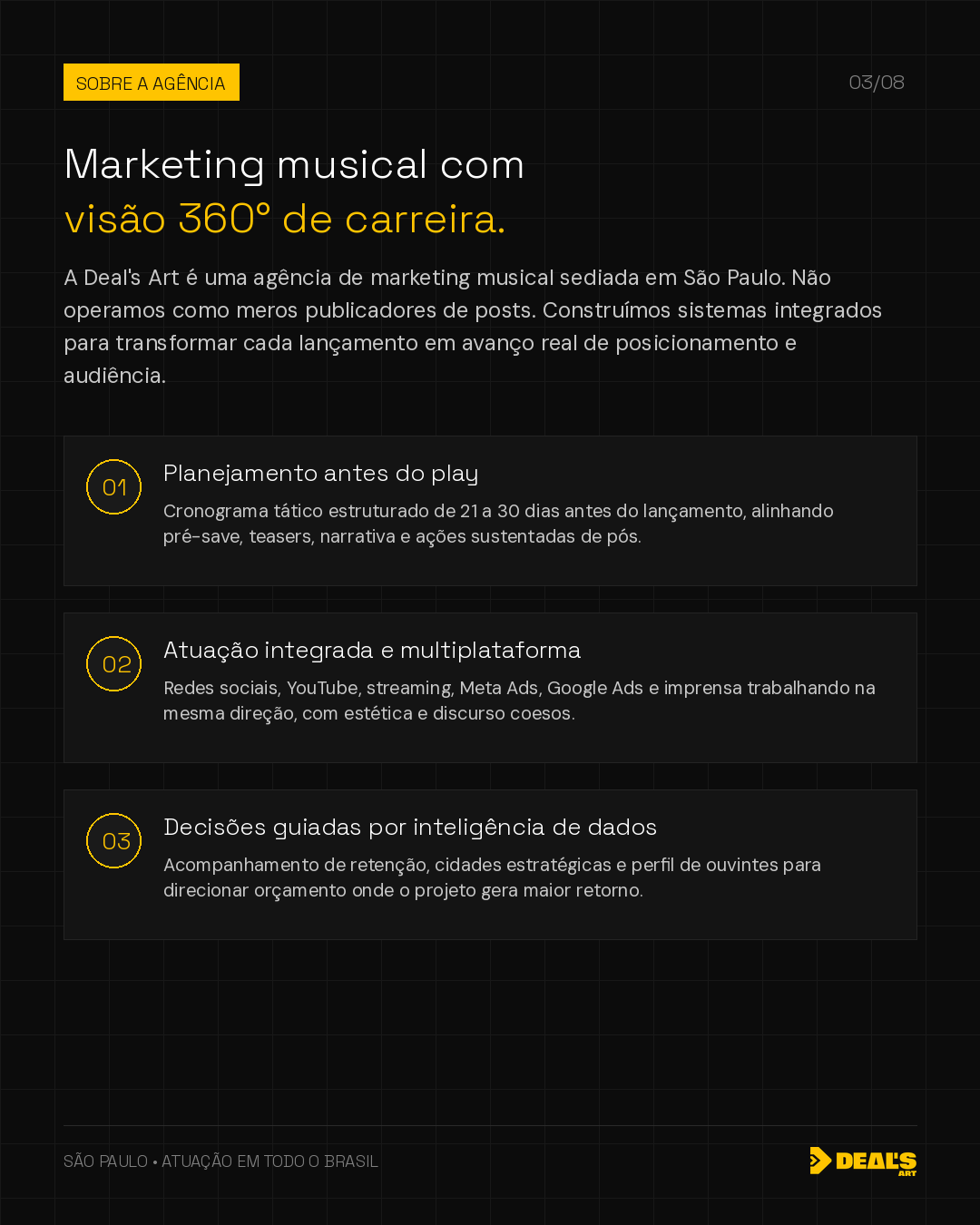
At Deal’s Art, we start by turning a clear brief into a tailored tactical plan and release schedule that respects the artist’s identity and goals. We can review your brief, identify strategic gaps, and propose a modular scope based on your budget and priorities—without making unfounded promises about results. If you are looking for a partner that combines editorial planning, creative production, and campaign execution with project governance, we can discuss the ideal scope for your current career stage.
A consistent strategy connects creation, context, and relationships. If you want to organize your next cycle with an integrated perspective, Deal's Art can help define the project's priorities.
Present my project