
Choosing the right distributor affects operations, cash flow, and release capacity. Many teams face late deliveries, hidden charges, and disconnected reports that delay decisions. With pressure to get a catalog live and manage royalties, understanding operational differences is urgent. This article outlines practical criteria for aligning a distributor with your label’s or career’s needs.
Delivery SLA: What to Measure Beyond the Upload Date
Delivery time to platforms is only the beginning: assess the average time until availability on each service, correction windows, and policies for rejections. Check how technical issues are communicated and what priority levels are available for urgent releases. Find out whether the SLA is contractually guaranteed or merely an operational estimate. Consider the SLA’s impact on the marketing calendar and commitments to partners.
Billing Models and Their Impact on Cash Flow
Distributors charge in different ways: a flat fee per release, a monthly subscription, a commission on revenue, or combinations of these options. Compare direct costs with billing timelines, holdbacks, and possible advances. For labels, predictable monthly costs may be preferable; for independent artists, a per-single fee may make sense. Also assess extra charges for changes, takedowns, or supplemental metadata.
Report Integration: Granularity and Automation
Reports should provide consolidated data by release, track, market, and net revenue after fees. Check export formats (CSV, API, dashboards) and whether there is integration with ERPs, CRMs, or accounting platforms. Automatic updates and their frequency (daily, weekly, monthly) affect financial decision-making and the closing of artist payments. Prioritize distributors that make reconciliations easier and reduce manual work.
Operational Risks and Support: Support SLA and Escalation
In addition to the technical SLA, assess support response times, available channels, and escalation processes for critical issues. Ask about Portuguese-language support availability and experience with label catalogs, complex releases, and reissues. Review SLAs for metadata corrections and communication in cases of fraud or ownership disputes. Effective support reduces rework and helps mitigate schedule-related losses.
Practical Criteria for Hiring a Service or Handling It In-House
Set priorities: delivery speed, predictable costs, report quality, or dedicated support. Map annual release volume, seasonal peaks, and technical integration needs before comparing proposals. Request proofs of concept or tests with a pilot release to assess timelines and data quality. Document responsibilities in an operational checklist and include SLA and billing clauses in the contract. When you have questions about rights, contracts, or taxation, consult a qualified professional.
How Deal's Art Connects to This Operational Decision
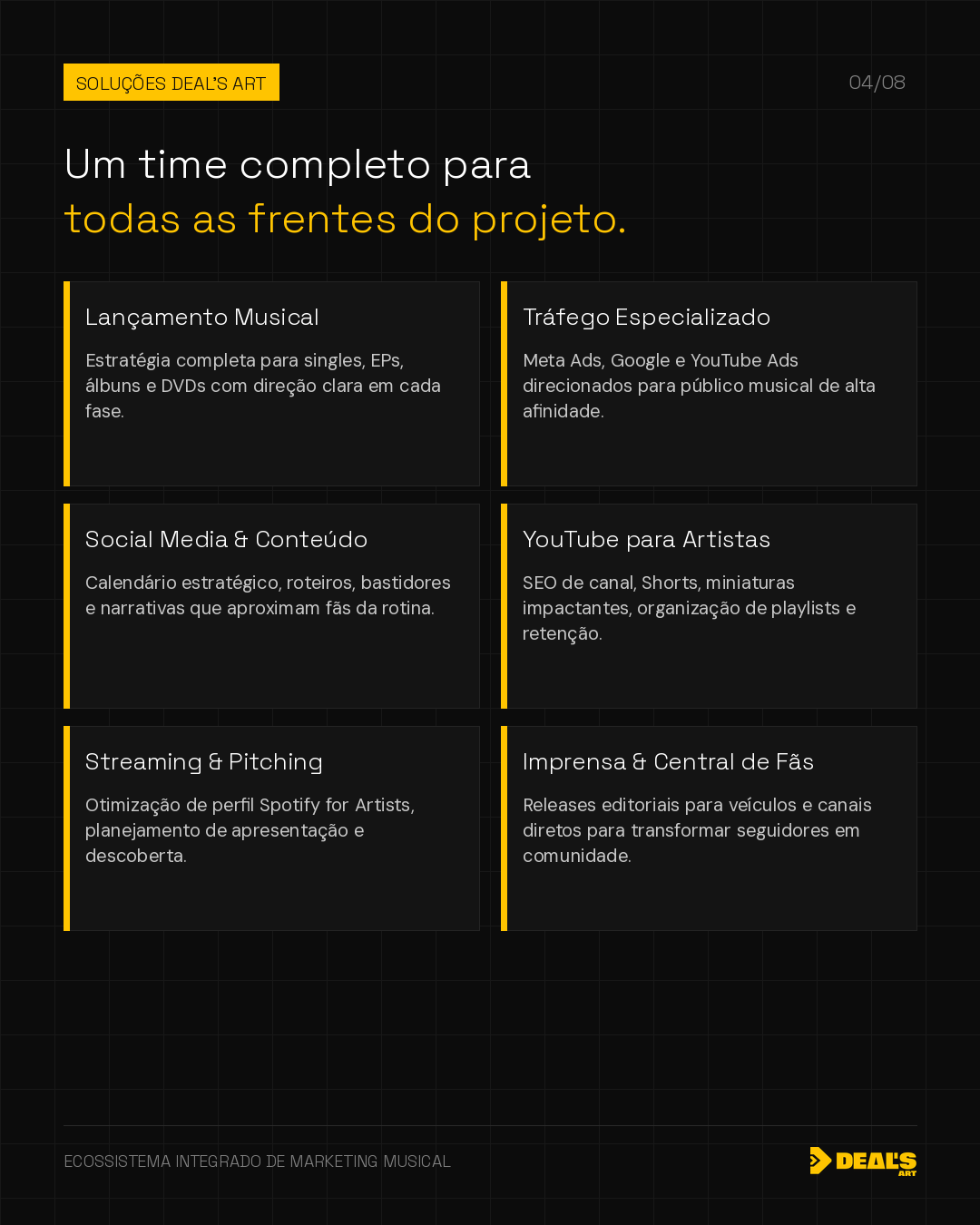
Deal's Art provides music streaming and pitching services with a focus on operational processes, report integration, and release governance. We can map your current workflow, compare distributor options according to SLAs and billing models, and suggest operational adjustments to reduce friction. We do not promise automatic commercial results; we provide an assessment and an operational proposal aligned with your project. For specific questions about pricing, contracts, or rights, we will detail the scope and refer you to specialists when needed.
A consistent strategy connects creation, context, and relationships. If you want to organize your next cycle with an integrated perspective, Deal's Art can help define your project’s priorities.
Present my project