
Planning the coming year without clear criteria invites scattered resources and missed opportunities. Artists, labels, and managers face limits on time, budget, and attention, making it essential to choose priorities that maximize impact and minimize risk. A risk-return matrix offers a pragmatic way to classify initiatives and align stakeholders. The sooner you structure these priorities, the more efficiently you will use the next annual cycle.
Why use a risk-return matrix
A risk-return matrix turns subjective decisions into visual, comparable criteria. Instead of following trends or external pressure, the matrix helps balance high-potential initiatives with those that are safer to execute. For music careers, this means comparing releases, tours, content investments, partnerships, and catalog development. This approach reduces waste and makes it easier to communicate priorities across the team, partners, and investors.
How to build your matrix: axes and categories
Set the horizontal axis as expected return (artistic impact, reach, monetization, and brand building) and the vertical axis as risk (cost, time, complexity, and dependence on third parties). Divide the matrix into quadrants: high return/low risk, high return/high risk, low return/low risk, and low return/high risk. List possible initiatives and position each one based on estimates and available information. This visualization makes it easier to identify where to focus resources during the year.
How to assess return and risk with practical data
Use historical and preliminary metrics to estimate return: audiences reached by previous campaigns, show conversion, average revenue by source, and engagement with releases. To assess risk, consider direct costs, scheduling risks, logistical dependencies, and working capital needs. Assign objective scores (for example, 1–5) and add them up for comparison. Even rough estimates are valuable if applied consistently across projects.
Turning the matrix into an operational annual plan
Once priorities are positioned, organize actions by quarter, allocating resources to the highest-priority quadrants. Leave room for high-risk/high-return experiments, but limit financial and scheduling exposure. Assign owners, OKRs, and checkpoints to each initiative, allowing for quarterly reviews. The matrix should be a living document: adjust it as results come in and circumstances change.
Practical criteria for hiring or delivering services
Evaluate vendors and professionals based on proven expertise within the desired scope, clear deliverables, and strategic fit with your goals. Ask for portfolios and references for similar projects; validate detailed processes and timelines. Prioritize contracts with performance metrics and milestones, avoiding clauses that limit your creative flexibility and rights to works; intellectual property specifications and revenue sharing should be clear. Consider total costs and in-house capacity versus outsourcing, and favor contract structures that allow for review throughout the year.
How Deal's Art helps without promising results
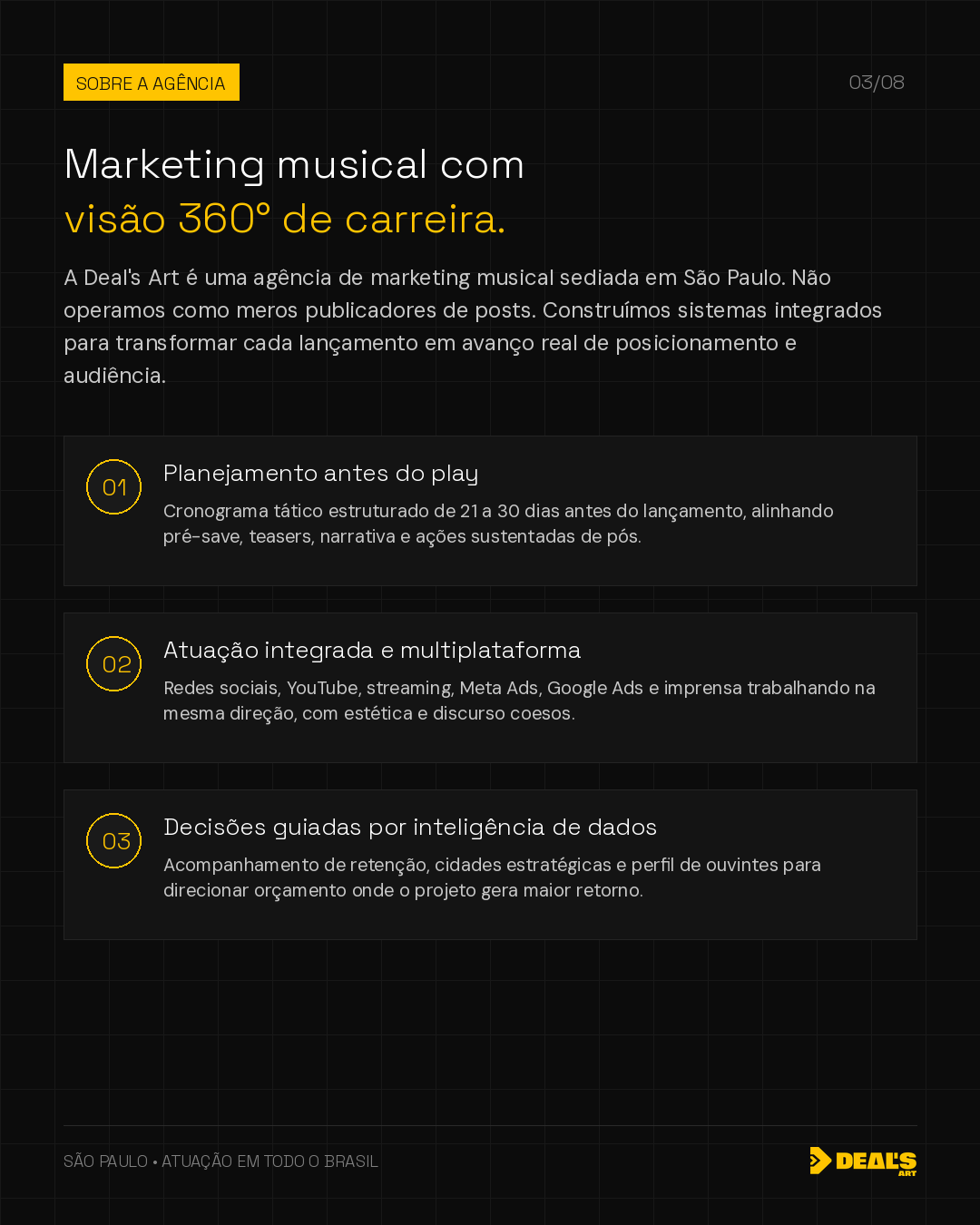
Deal's Art offers strategic diagnostics and the development of a risk-return matrix tailored to your career or catalog, aligning priorities, budget, and operational plan. Our service focuses on methodology, clear criteria, and actionable deliverables, without guaranteeing specific performance. For cases requiring in-depth legal or tax assessment, we refer clients to specialized professionals. If you need guidance in deciding on investments and responsibilities for the coming year, we can lead a diagnostic session.
A consistent strategy connects creation, context, and relationships. If you want to organize your next cycle with an integrated vision, Deal's Art can help define the project's priorities.
Present my project