
Paid traffic campaigns for music often fail because there is no clear process for testing creative against audiences. This leads to rapid spending without evidence to support scaling decisions. A practical diagnosis reduces uncertainty and guides ongoing investment, especially for releases and tours. Start with a repeatable plan to avoid misguided assumptions and wasted budget.
Why testing creative × audience is a priority
Ad performance depends both on the creative content and on how well it matches the audience. Isolated tests help identify which elements have a measurable impact: music, image, copy, CTA, and format. Without this isolation, mixed results make it impossible to learn and make informed decisions. For artists, this is critical: the right audience can increase the effectiveness of every real invested.
Practical A/B testing methodology (audiences × creative)
Structure tests along two dimensions: creative variations and audience segments. Run cross-tests in phases: a discovery phase with multiple audiences and a few creatives, followed by a refinement phase with winning creatives and promising audiences. Keep controls clear and define primary metrics before launch (e.g., cost per desired action). Document hypotheses and results to avoid redundant retesting.
Metrics and interpretation: beyond the click
Define primary metrics aligned with the objective (engagement, completed views, mailing list sign-ups, pre-saves) and secondary metrics (CTR, frequency, cost per result). Analyze quality trends: if audience retention drops as scale increases, that signals saturation or a less relevant creative. Use confidence intervals and consistency over time before declaring a winner. Avoid drawing conclusions from small samples.
Experimental budget recommendations
Set aside a test budget proportional to the project's stage: releases and initial campaigns need more room to explore audiences; catalog or show campaigns can be more conservative. Allocate budget in blocks for each phase: discovery (50%), optimization (30%), and verification (20%). Adjust allocations according to results, and always keep funds available to replicate tests that show positive signs. Budgets should be reviewed after each testing cycle.
When to hire or execute in-house: practical criteria
Prioritize hiring when the project requires integration with career strategy, rights management, or multichannel optimization beyond internal capabilities. Evaluate a team or vendor based on experience with artists, clarity of its testing methodology, reporting processes, and ability to make quick adjustments. For in-house execution, ensure access to ad management tools, knowledge of targeting, and disciplined documentation. Contractual matters, creative rights, and budget details may require legal or tax advice.
How Deal's Art fits into diagnosis and execution
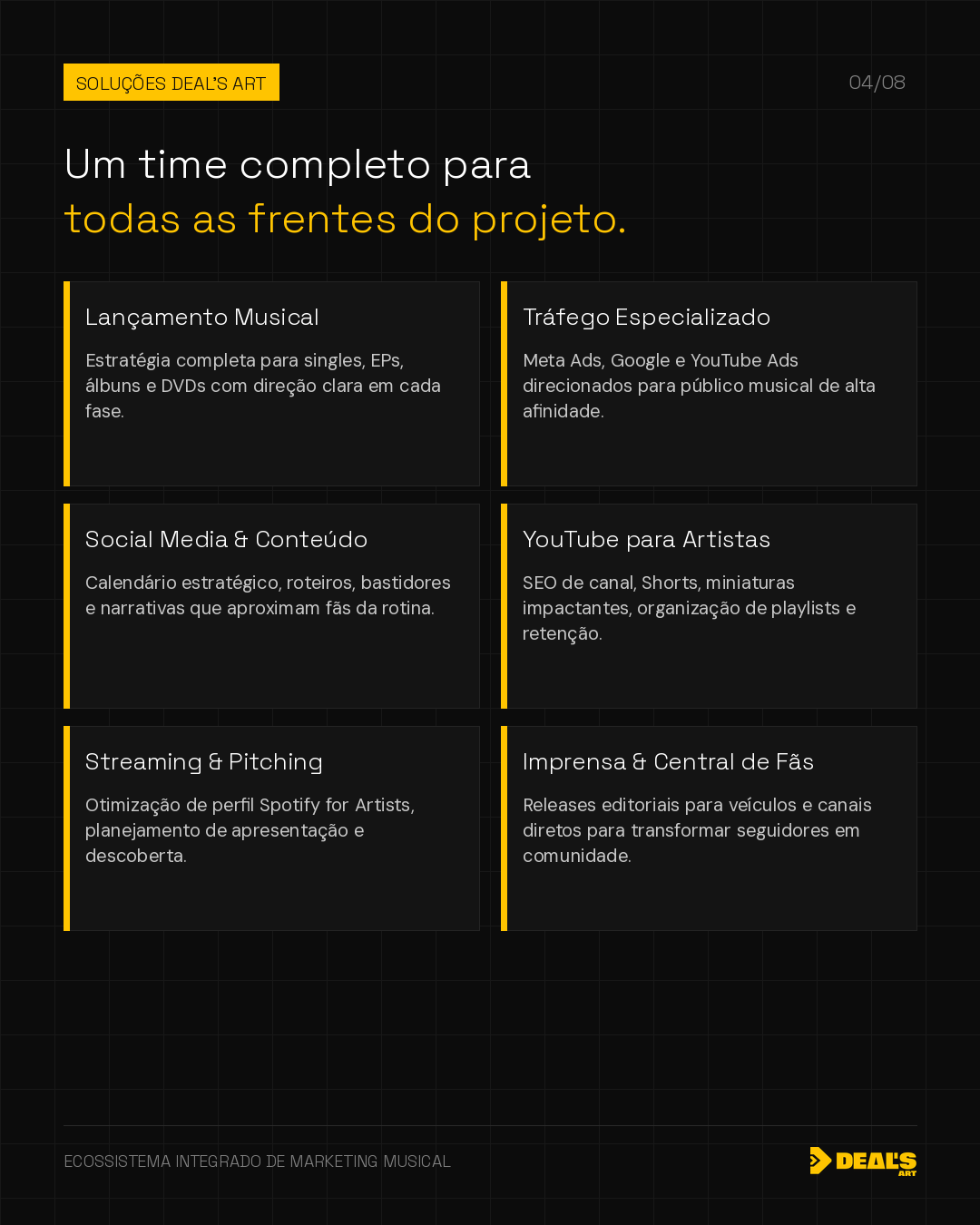
Deal's Art offers diagnosis and implementation of paid traffic campaigns for artists and their teams, focusing on structured creative × audience testing. We can review hypotheses, build an A/B testing plan, propose an experimental budget allocation, and help set criteria for scaling or pausing variations. We don't promise automatic results; we offer a process, experience, and recommendations tailored to your project. For specific questions about pricing, contracts, or rights, we can schedule a conversation and assess the scope.
A consistent strategy connects creation, context, and relationships. If you'd like to organize your next cycle with an integrated perspective, Deal's Art can help define your project's priorities.
Present my project