Digital campaigns for artists and record labels often suffer from endless revisions and disconnected art direction across static pieces and motion. This fragmentation delays releases, increases costs, and dilutes brand perception. Ensuring consistency requires a clear process, defined deliverables, and an efficient approval pipeline. Prioritizing this now reduces rework and preserves the campaign’s creative impact.
Why inconsistency increases the number of revisions
Revisions multiply when there is no single point for aesthetic decisions or when visual references are vague. Different team members (designer, motion designer, social media) tend to interpret the brief in different ways without a system of guidelines. Multiple formats require creative adaptation that, without parameters, becomes a source of subjective decisions for each piece. This creates correction cycles that consume valuable time for the team and the artist.
Essential deliverables for unifying static and motion
An effective minimum package includes a mood board, color palette, typography, grid system, and motion keyframes. Editable templates for the most common formats reduce rework and maintain visual proportions across channels. Short storyboards or animatics preview pacing and transitions, preventing major changes at later stages. Final files with alternate versions (with and without captions, with and without a logo) speed up publishing on different platforms.
An approval process that prevents long cycles
Defining clear checkpoints — briefing, concept approval, static artwork approval, pre-motion approval, and final delivery — concentrates feedback at critical moments. Limiting revision rounds and setting a feedback window helps make decisions and protects the schedule. Using a single feedback platform with visual annotations reduces ambiguity between the team and the client. Deadlines and the person responsible for each stage should be included in the contract to ensure accountability.
Best practices for integrating design and motion
Start with defined visual constants and use reusable components that work in motion, such as vector logos and preconfigured mask elements. Establish timing and easing rules that respect the sonic identity and rhythm of the musical content. Adopt a central asset library to avoid conflicting versions and make updates easier. Hold brief alignment sessions among the art director, motion designer, and producer to validate technical decisions.
Criteria for hiring or carrying out art direction and motion
Assess experience with music campaigns and the ability to adapt an identity to multiple formats by reviewing portfolios and previous deliverables without fixating on numbers. Ask for a description of the process: deliverables, approval checkpoints, and the number of included revisions. Confirm technical compatibility between the supplied files and distribution platforms (resolution, codecs, captioning). Validate a realistic timeline with a buffer for adjustments and request references for workflows between teams. For contracts and pricing, bear in mind that scope and rights vary by project and that specific questions may require help from a legal professional or a creative business specialist.
How Deal's Art fits into the workflow without promising results
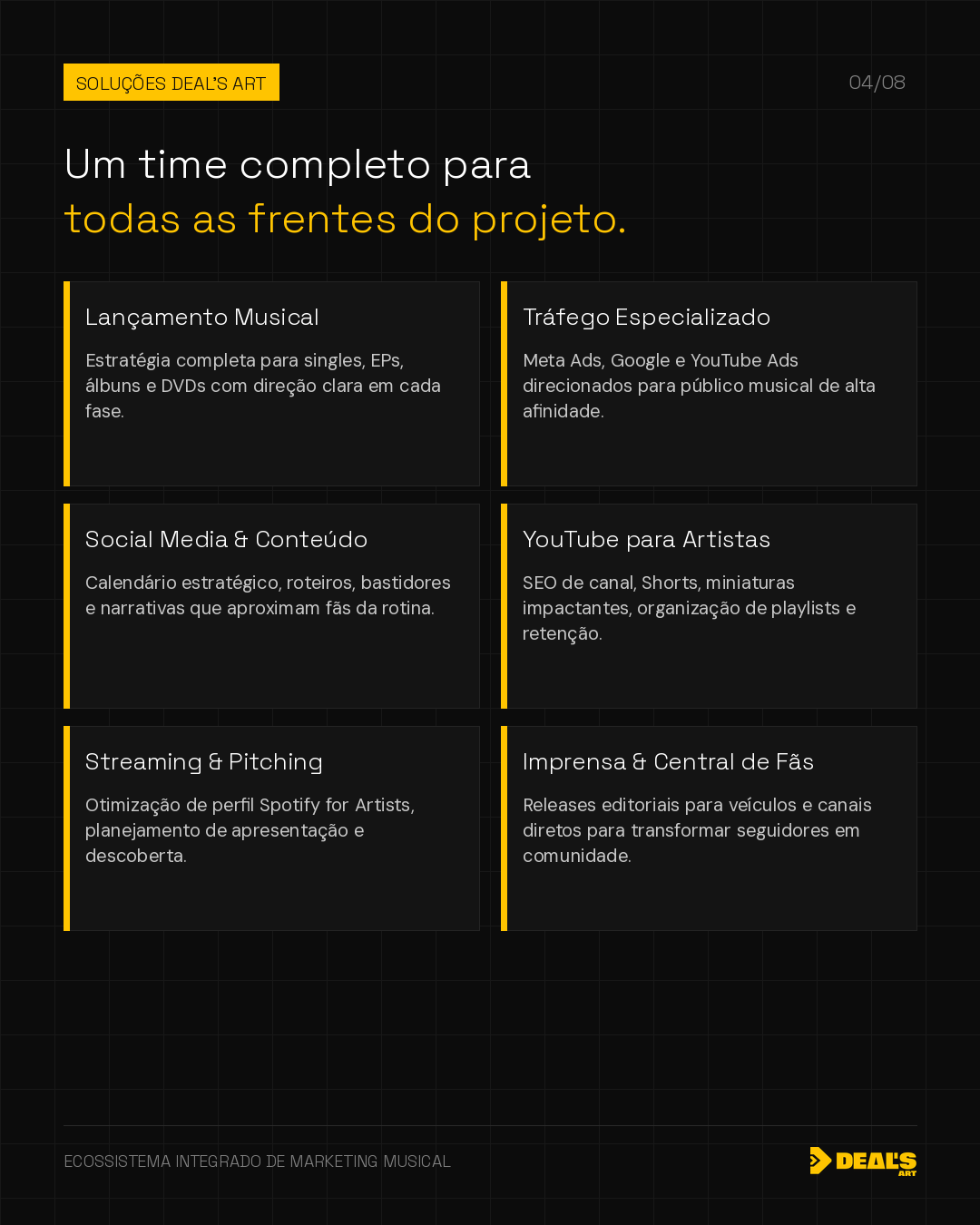
Deal's Art offers art direction and motion production packages designed to reduce revisions through clear deliverables and a defined pipeline. Our recommended service integrates design and visual identity for artists with documentation that guides internal teams and external vendors. We can present a process, timeline, and deliverable options for your project; pricing and rights details depend on the defined scope. Schedule a consultation to assess your case and request a customized proposal.
A consistent strategy connects creativity, context, and relationships. If you want to organize your next cycle with an integrated vision, Deal's Art can help define your project priorities.
Present my project