
Negotiating embargoes and exclusivity for music coverage is a critical part of the routine for teams handling releases, image, and press relations. Mistakes in dates, formats, or publication rules can jeopardize the editorial window and create conflicts with other partners. It is urgent to finalize clear terms before confirming any opportunity; without them, the artist and team lose control over the narrative and commercial terms. This article provides practical criteria for structuring agreements and reducing uncertainty when negotiating with media outlets.
The difference between an embargo, exclusivity, and a preview
An embargo is a time-based agreement in which a media outlet receives material on the condition that it will publish only after a specified date and time. Exclusivity means that one outlet has the exclusive right to publish about specific content for a period, which may limit other coverage or formats. A preview is usually an editorial or event variation in which a piece is shown to a restricted audience before its public release. Understanding these differences avoids overlapping commitments and helps define the value of the proposal for the outlet and the artist.
How to organize the schedule and release windows
When negotiating, set precise dates and times, taking time zones, editorial peak hours, and the artist's internal calendar into account. Set clear windows for when the content may be mentioned on social media, playlists, and other channels, including limits on reposting. Plan follow-up triggers, such as releasing additional materials after the initial publication, to maintain momentum without violating agreements. Document the schedule in writing and confirm it with everyone involved before sending sensitive materials.
Formats, angles, and content boundaries
Agreeing on the delivery format—an article, video interview, audio session, or exclusive clip—is an essential part of the agreement. Define what kinds of excerpts may be published (audio clips, images, lyrics) and whether there are restrictions on duration or quality. Also agree on the permitted journalistic angles if there are concerns about spoilers or controlling the narrative. Clarity about formats reduces rework and prevents publications that diverge from the communications plan.
Risks, penalties, and leak management
Negotiations should anticipate practical consequences for noncompliance, such as suspending future exclusives, revoking the embargo, or sending formal communication to the outlet. Avoid complex punitive clauses; favor measures that are proportionate and feasible. Establish procedures for leaks, including who communicates, the tone of the message, and which materials will be released in response. Preparing a contingency plan and training spokespersons reduces reputational impact and makes it easier to respond quickly.
Criteria for hiring or carrying out negotiation support
When hiring a publicist to negotiate an embargo and exclusivity, evaluate their experience with the type of media outlet and their knowledge of the music editorial market. Prefer professionals who document terms in writing, manage schedules, and keep records of communications. Also consider their ability to coordinate technical formats (sending stems, videos, press kits) and conduct follow-ups without compromising relationships. Check references and ask for examples of embargo protocols and contract templates that can be adapted to your project.
How Deal's Art supports this organization
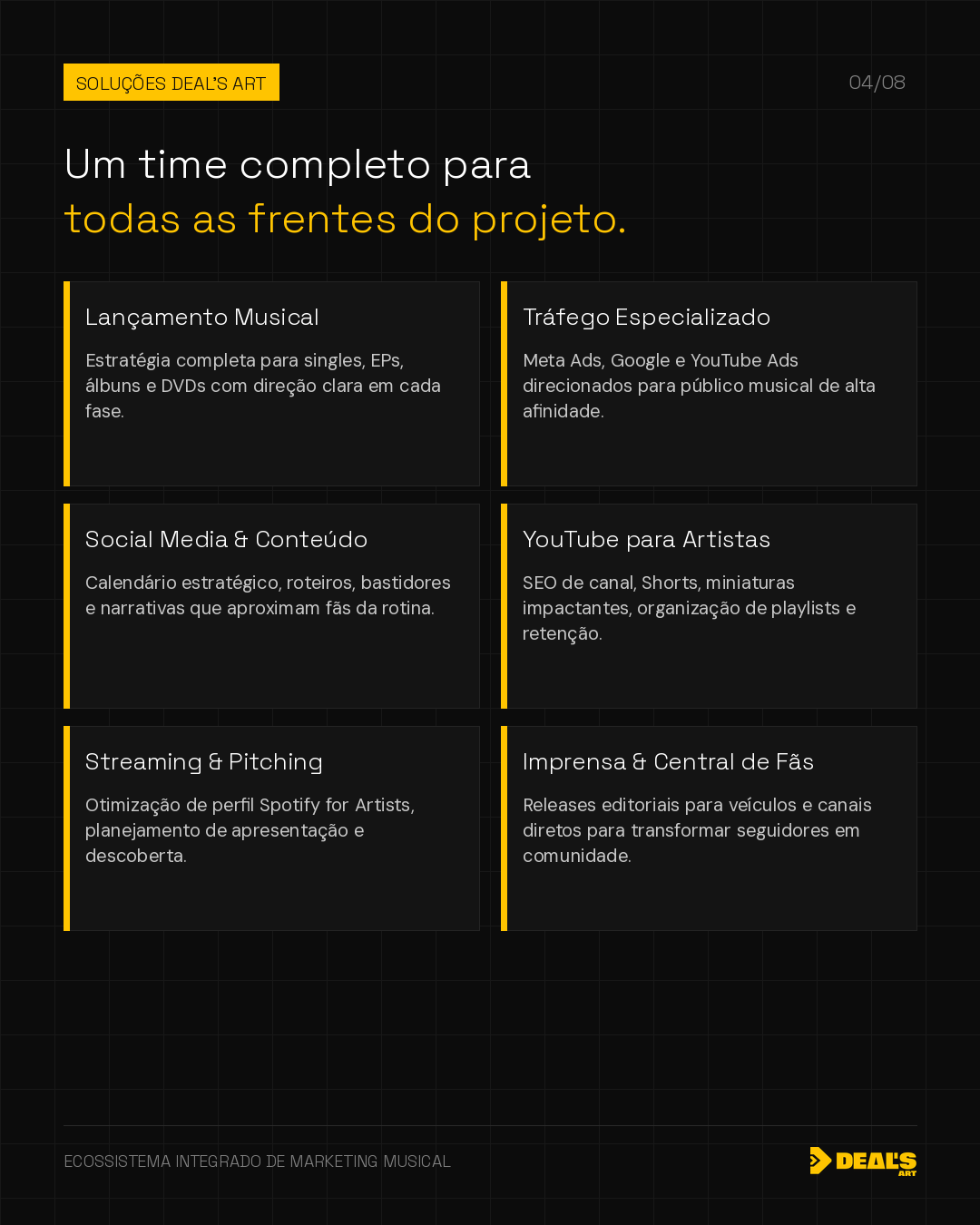
Deal's Art focuses on press relations and organizing coverage for artists, labels, and producers, offering support with defining schedules, formats, and publication boundaries. Our work includes aligning terms with media outlets, preparing technical materials, and documenting agreements to reduce ambiguities that arise during negotiations. For specific projects, details about price, scope, and rights depend on the context and may require a contract or specialized legal review. If you'd like to discuss how to structure embargoes and exclusivity for a project, we can assess the situation and propose a work plan.
A consistent strategy connects creativity, context, and relationships. If you'd like to organize your next cycle with an integrated perspective, Deal's Art can help define the project's priorities.
Present my project