
Labels, artists, and producers face a dilemma: should they focus their efforts only on Spotify or diversify across other platforms? With different audiences and compensation models, the wrong choice can spread investment too thin and reduce commercial impact. It is urgent to map where your catalog has the greatest audience and return potential to optimize work and budget. This article offers practical criteria for prioritizing streaming platforms and guiding strategic decisions.
Overview of the main platforms beyond Spotify
Apple Music, Amazon Music, Deezer, YouTube Music, and Tidal have different audience profiles, consumption formats, and compensation policies. Platforms such as YouTube Music combine an audiovisual presence with discovery through video, while Apple Music tends to point to an audience focused on purchasing and audio quality. Regional markets also matter: local or regional services may concentrate listeners relevant to specific genres. Understanding this landscape helps avoid decisions based only on brand recognition and map real audience opportunities.
Audience criteria: who is on each platform
Analyze demographic and behavioral data about your target audience to find out where your music resonates most. Age range, consumption habits (editorial playlists, radio, videos), predominant device, and geographic penetration are variables that determine priority. Use sources such as market reports, proprietary social media data, and platform analytics to build this picture. Prioritizing platforms aligned with your audience profile reduces wasted promotional investment.
Revenue criteria and compensation model
Each service has different rules for payment per stream, subscriptions, and monetization mechanisms (e.g., video, micropayments, sales). Assess the potential revenue mix by territory, type of consumption, and content format. Don't focus solely on the value per stream; also consider opportunities for synchronization, e-commerce integration, and direct monetization programs. The decision should balance audience volume with profitability per user.
Promotion costs and operational effort by platform
Promoting across multiple platforms requires resources: creating assets (metadata, cover art, videos), paid campaigns, playlist pitching, and relationships with local curators. Estimate operational cost-effectiveness: team time, ad spend, the need for exclusive content, and distribution complexity. Platforms with demanding visual asset requirements or differentiated formats may consume more budget, justifying prioritization only if the audience return is clear. This operational calculation is crucial for planning monthly activities and release schedules.
How to hire a professional or handle this prioritization in-house
Define the scope and indicators before hiring: audience objectives by territory, stream targets by channel, and engagement metrics. Look for providers with experience in streaming analytics, platform negotiations, and multiplatform campaign execution; ask for examples of processes and deliverables, not promises of results. Establish a contract with measurable deliverables, reporting frequency, and clauses regarding data ownership and rights; remember that details about prices, contracts, and rights depend on the project and may require legal or accounting advice. For in-house execution, centralize data, standardize assets, and set aside a budget for controlled tests.
Why align this prioritization with a specialized consultancy
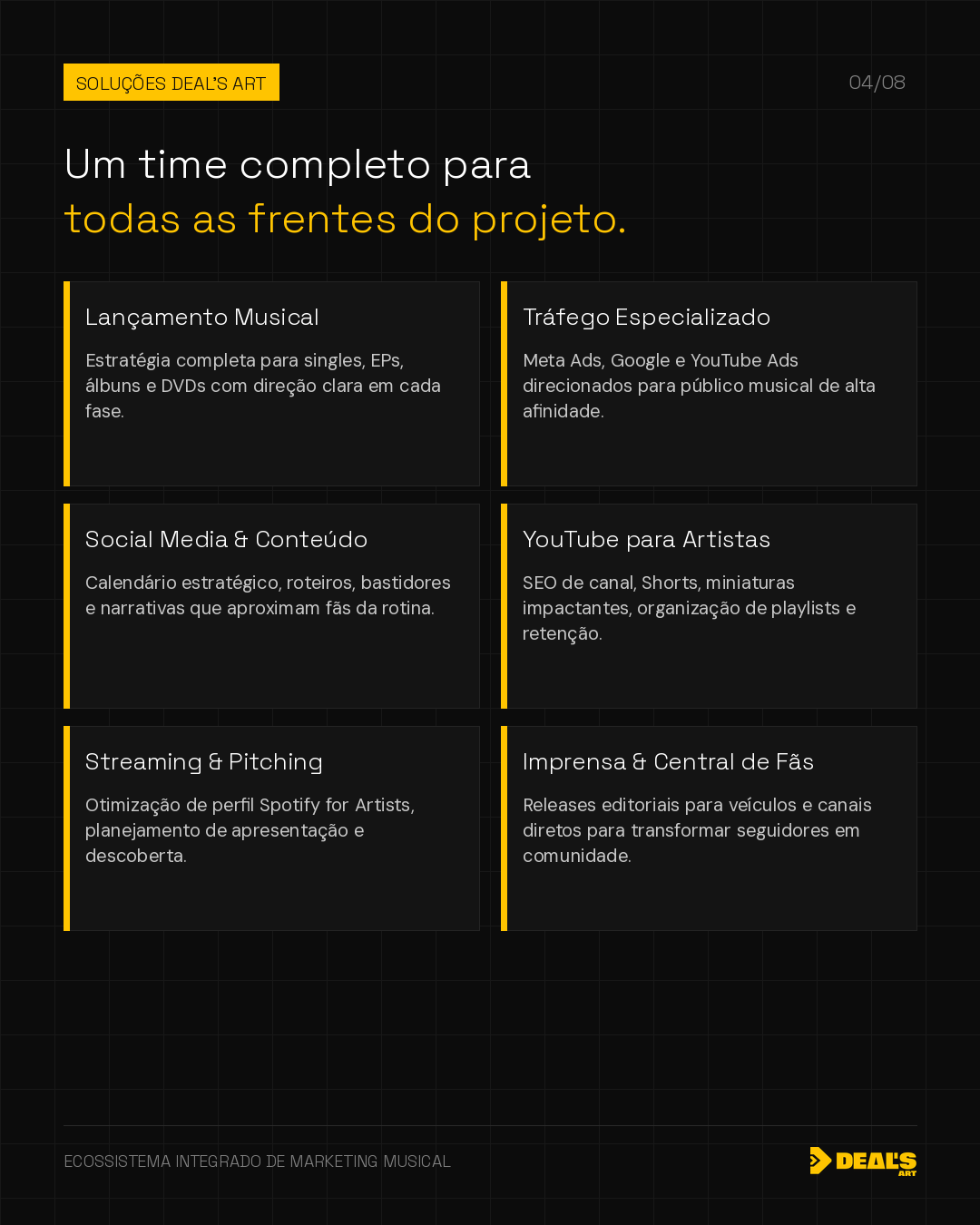
Prioritization depends on combining audience, revenue, and operational capacity data—a task that takes time and requires technical knowledge. Deal's Art offers streaming and music pitching services to structure this assessment and operationalize a presence on selected platforms, without promising guaranteed results. We work on audience mapping, channel evaluation, and campaign execution aligned with your commercial objective, adapting the scope and investment to the project. Schedule a meeting to assess your streaming priorities and discuss how our approach can support your strategy.
A consistent strategy connects creativity, context, and relationships. If you'd like to organize your next cycle with an integrated perspective, Deal's Art can help define the project's priorities.
Present my project