Photography and image direction stop being a luxury when a career demands consistency, visual recognition, and materials that truly speak to opportunities—press, showcases, contracts, and communication with fans. Many artists put off this investment because of the cost or because they do not know what to hire, relying on improvised images that confuse the market’s perception. Addressing this now helps prevent missed opportunities and lays the groundwork for upcoming campaigns, releases, and negotiations. Below, we explain when and how to decide to invest and how to evaluate who will lead your image direction.
When your image starts holding opportunities back
If press coverage, show invitations, or label outreach depend on visual materials, amateur or inconsistent photos send an unprofessional message. Notice whether you receive feedback asking for updated photos, or whether streaming platforms and press kits fail to reflect your sound identity—these are signs it is time to act. Decide to prioritize production when the lack of a visual identity becomes a practical obstacle to contracts, show bookings, or partnerships. Action: quickly inventory the images you have and note the main gaps to address.
What image direction delivers beyond the photo
Image direction is more than taking pictures: it involves visual concept development, a creative brief, on-set direction, and final selections for different uses. Think about practical deliverables: cover photos, social media materials, and press formats, with variations that work vertically, horizontally, and in the studio. Ask for proposals that account for a look plan, locations, and a usage plan, reducing rework and extra costs. Action: define your priority channels (press kit, social media, single cover) to guide the shoot.
How much to invest and when to scale up
The investment depends on the scope: a single session for press kits costs less than a project with a photoshoot, short video shoots, and asset editing for campaigns. Prioritize in phases: start with a basic professional set that covers press and social media; then add conceptual editorials and video content as needed. Plan an annual budget by dividing production across releases and merchandising to avoid spending spikes. Action: create an annual visual roadmap with release dates and required resources.
How image direction affects branding and storytelling
Consistent direction makes your aesthetic tell part of your musical story, aligning clothing, color, setting, and expressions with your artistic positioning. Without consistency, every photo sends contradictory messages to audiences and the market, making recognition and trust harder to build. Use mood boards, references, and accounts of your career to make your image an extension of your musical narrative. Action: put together a mood board with references and describe the message each image should convey.
Practical criteria for hiring and executing with confidence
Evaluate portfolios for consistency, technical quality, and fit with your positioning—not just attractive aesthetics; ask to see examples of work delivered for artists at a similar career stage. Check that the scope clearly defines deliverables, deadlines, usage rights, and revision policies to avoid hidden costs; well-defined contracts protect both parties. Beware of improvisation: shoots without a brief, defined styling, or a backup location often lead to rework and photos that do not meet commercial needs. Action: request a detailed written brief, delivery schedule, and clauses covering file usage before signing.
How Deal's Art works and why to consider our image direction services
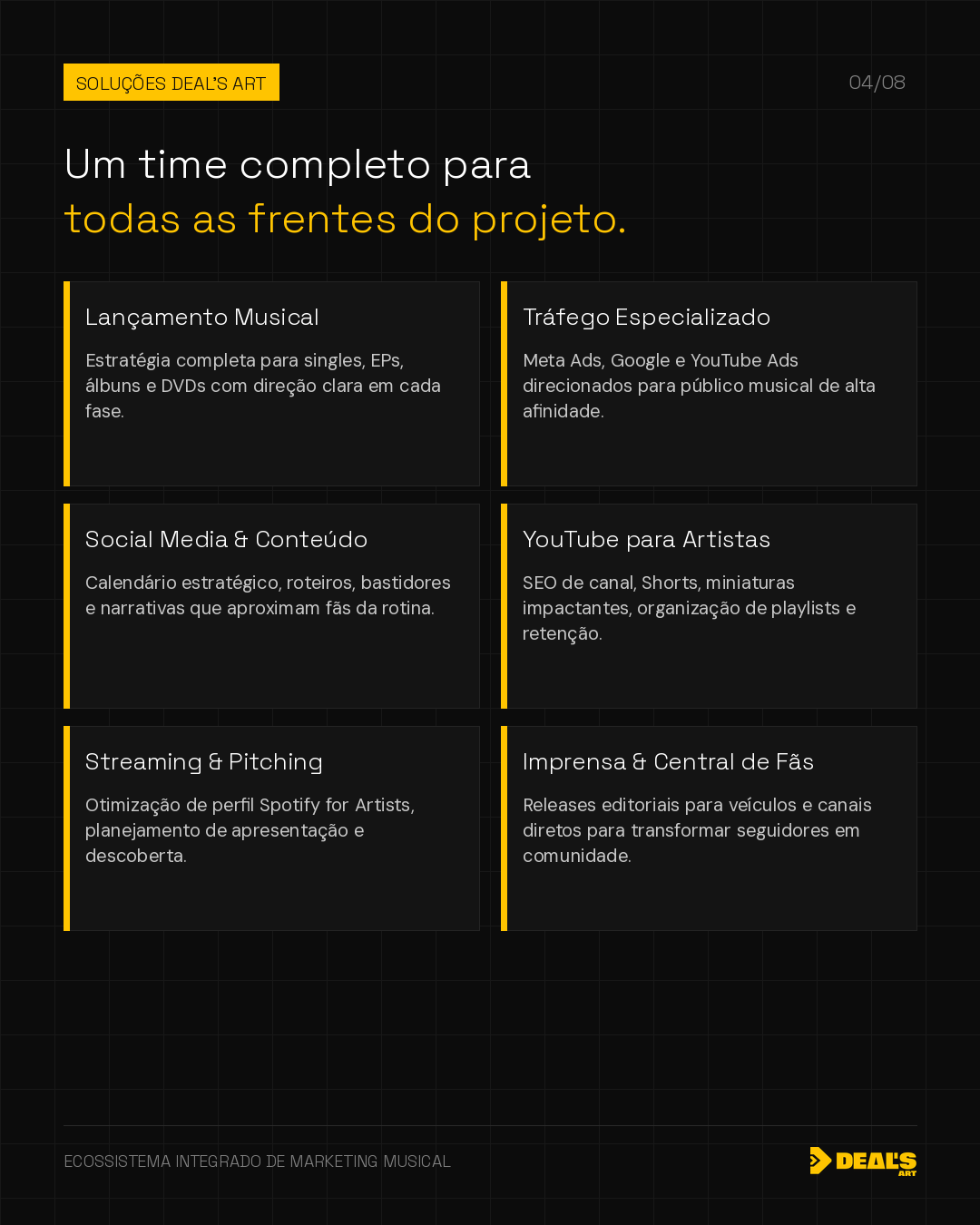
At Deal's Art, we offer image direction integrated with design and content for artists, focusing on creating assets ready for press, streaming, and social media while respecting artistic positioning and commercial goals. We work with a defined scope, collaborative mood boards, and deliverables optimized for multiple formats, minimizing rework and unnecessary costs. For a quote and proposal, we assess your career stage and goals to recommend the most efficient scope; when legal or contractual questions arise, we recommend a professional assessment. Action: request a scope assessment to receive a proposal aligned with your career plan.
A consistent strategy connects creation, context, and relationships. If you want to organize your next cycle with an integrated vision, Deal's Art can help define the project’s priorities.
Present my project