
Following isn’t the same as buying: many artists and labels build an audience without turning engagement into direct revenue. A lack of clear conversion strategy, sales-ready formats, and effective calls to action often wastes reach just before the moment of purchase. This guide presents tested formats, a content journey, and call-to-action templates designed to sell tickets and products with clarity. Putting these practices into action quickly increases campaign efficiency and reduces the cost per sale.
Mapping the buying journey for music audiences
Start by identifying clear steps: discovery, interest, consideration, decision, and loyalty. For each stage, define a content objective, a success metric, and a specific call to action. Different profiles (hardcore fans, curious newcomers, occasional buyers) need distinct paths within the same campaign. Documenting this flow helps prevent potential buyers from being lost between posts and ads.
Content formats that work for direct sales
Use formats that reduce friction and show immediate value: short videos highlighting the product or experience, carousels outlining benefits, live streams with limited-time offers, and stories with a direct link. Content that provides social proof (testimonials, show photos, unboxings) speeds up decisions when placed at the right point in the journey. Test variations in length, language, and the ratio of educational to commercial content to find the balance that converts.
Calls to action and triggers that convert
CTAs should be clear, specific, and action-oriented: “get your ticket,” “reserve your package,” “buy at a discount through X.” Combine urgency (limited time), scarcity (limited availability), and a direct benefit (discount, free gift, upgrade) in a factual and transparent way. Include practical instructions in the CTA to reduce questions: how, where, and by when to buy. Avoid exaggerated promises; focus on making the next step clear.
Calendar and post sequence for a sales campaign
Structure the campaign in three phases: pre-launch (build anticipation and capture leads), launch (main offer with frequent CTAs), and post-sale (confirmation, upselling, and loyalty). Set the frequency and mix of formats for each channel: for example, reels for reach, stories to drive traffic, and pinned posts for social proof. Reserve slots for targeted ads and retargeting to reach people who have shown interest. Daily monitoring makes it possible to adjust messaging and budget allocation in real time.
Criteria for hiring or carrying out social media and content services
Look for providers with a clear conversion methodology that covers planning, execution, testing, and reporting. Evaluate their experience with ticket or similar product launches, their audience-targeting capabilities, and their ability to manage creative assets in multiple formats. Confirm approval processes, delivery timelines, and creative ownership—rights and scope vary by project and may require a detailed contract. For questions about pricing, investment, or complex contracts, consult a legal or commercial specialist before signing.
Why consider Deal's Art for your conversion content kit
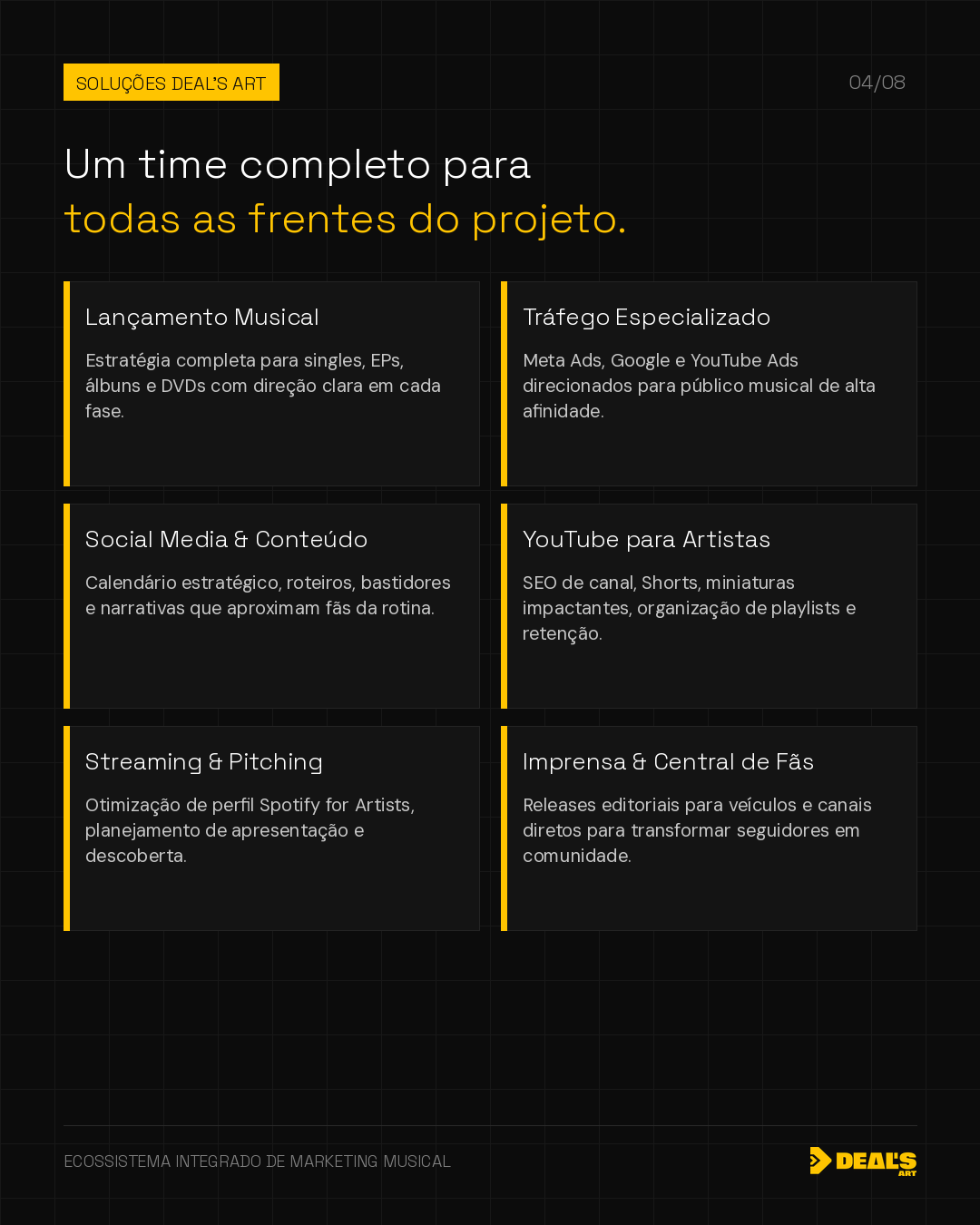
Deal's Art focuses on social media and content for artists, developing conversion kits that align formats, CTAs, and customer journeys with a project’s commercial strategy. We can map audiences, create calendars, scripts, and assets ready for direct sales, while making the scope, rights, and investment clear for each project. If you need practical support turning followers into buyers, we can propose a tailored solution. Request a proposal to create your conversion content kit and start the conversation.
A consistent strategy connects creativity, context, and relationships. If you’d like to organize your next cycle with an integrated perspective, Deal's Art can help define the project’s priorities.
Present my project