
Artists and labels with extensive catalogs face the dilemma of using a single creative or adapting ads for different audiences. Generic creatives waste budget; too many creatives without a method create operational complexity. Optimizing is urgent because poorly segmented campaigns cannibalize data and reduce acquisition efficiency. This guide offers practical criteria and a decision-making process to determine when and how to adapt creatives in catalog campaigns.
Why segment creatives for music catalogs
Segmenting creatives makes it possible to align the message, aesthetic, and offer with different interests and behaviors within the target audience. In catalogs, tracks and projects have varied attributes—genre, era, language, mood—that respond differently to visual and audio stimuli. When done well, segmentation improves ad relevance and reduces waste by delivering the right asset to the right audience. However, segmentation without testable hypotheses increases production costs and makes analysis more difficult.
What signs indicate that you should adapt creatives
Monitor performance metrics by segment: CTR, engagement rate, CPA, and conversion rate for defined objectives (pre-saves, leads, targeted streaming). Clear signs that it’s time to adapt include low CTR alongside a high impression rate in specific segments, significant variation in conversion rates between tracks in the catalog, and qualitative audience feedback. Also consider catalog differentiation: if your repertoire spans distinct genres and moods, the need for segmented creatives increases. Finally, watch operating costs: if the estimated benefit does not outweigh production costs, prioritize testing before scaling.
Practical models for adapting creatives by audience
Use models that balance scale and personalization: minimal variations (the same video with different opening seconds), themed groups (collections by genre or playlist mood), and dynamic creatives that swap the photo, title, and audio clip based on the audience. For releases, pair creatives with personas—for example, indie fans versus electronic music fans—adjusting the call to action and visual. Combine A/B tests with controlled rotation routines to identify winners before mass production. Document hypotheses and results to build a reusable asset library.
How to structure tests and measure catalog returns
Set clear hypotheses: what change to the creative should produce what impact, and for which audience. Set aside budget for a learning phase with statistical controls, and limit the number of variables per test to get actionable insights. Use audience segmentation to compare the performance of similar creatives, and apply traffic quality metrics, not just volume—for example, page retention, average listening time, and post-click actions. Document results and implement scaling rules: when a creative exceeds predefined benchmarks, gradually allocate more budget.
Criteria for hiring a professional or handling it in-house
Hire a professional or handle it in-house when there is alignment between music industry experience and technical expertise in paid traffic. Validate experience with A/B tests, funnel metric analysis, and agile creative production with iterative deliverables. Check their processes: their ability to map personas, create testable hypotheses, plan test scripts, and document learnings. Require transparency about media budgets versus production costs and attribution methodologies. For contractual questions, rights, and pricing, consult a legal or financial specialist, since scope and investment vary by project.
How Deal's Art approaches this challenge
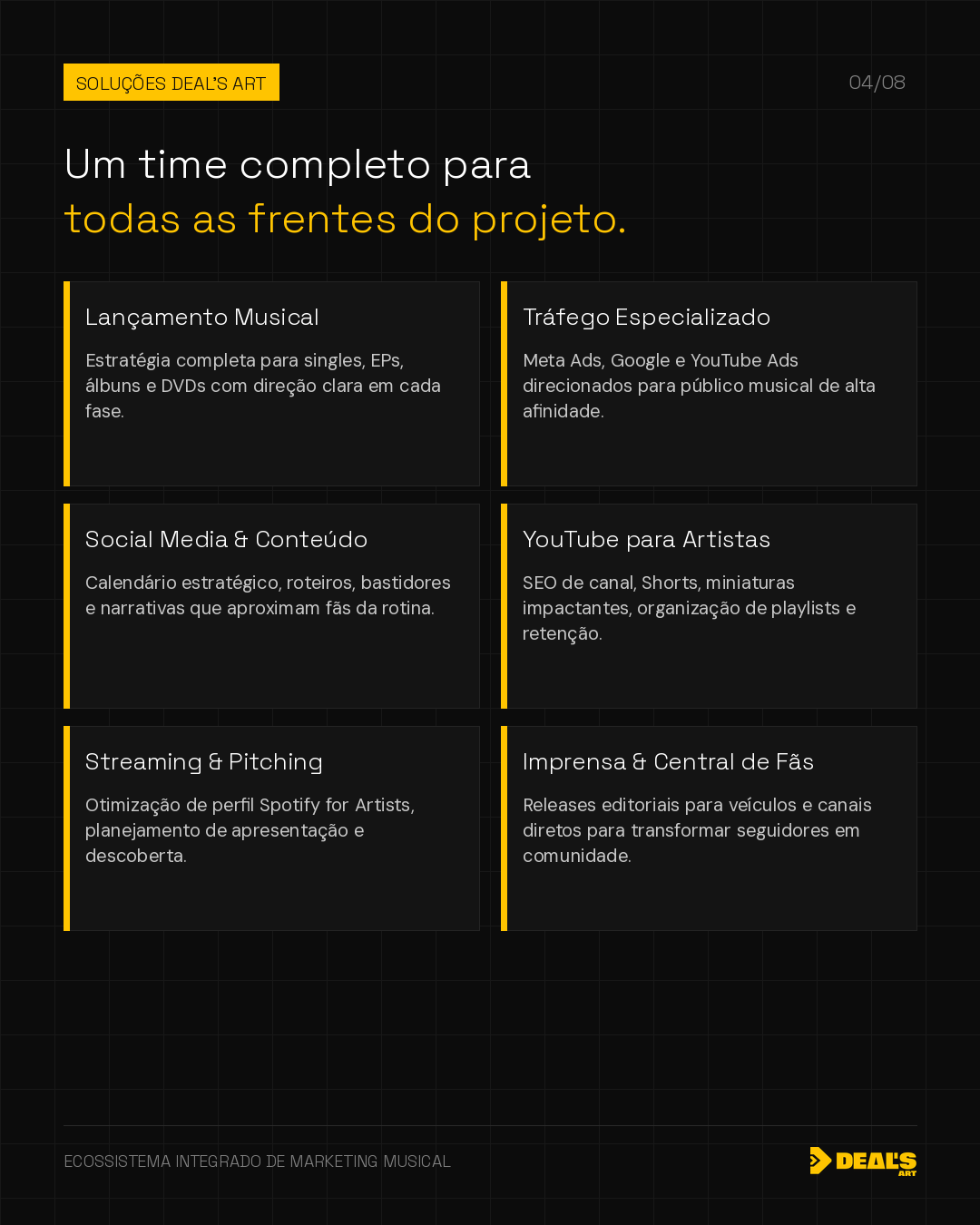
Deal's Art offers consulting on creative segmentation and test structuring for music catalogs, combining knowledge of the music market with paid traffic practices. We work on funnel diagnostics, persona-based segmentation, and a testing plan with defined deliverables and checkpoints, without promising specific results. Scope, budget, and contractual terms depend on the size of the catalog, objectives, and project resources; technical or legal questions may require specialized support. To move forward, we recommend an initial paid traffic audit to map opportunities and propose an execution plan.
A consistent strategy connects creativity, context, and relationships. If you want to organize your next cycle with an integrated perspective, Deal's Art can help define the project's priorities.
Present my project