
Teams that record without researching search intent often produce videos that do not align with what audiences are looking for, wasting time and resources. On YouTube, titles and topics need to answer real user questions before you press record. This guide shows how to identify those questions and use them to prioritize topics, formats, and editorial hierarchy. Acting on prior research reduces uncertainty in production and improves strategic efficiency.
Why researching intent matters before recording
Intent research shows which questions, formats, and consumption moments matter to the audience, helping avoid unfocused content. Without this research, teams tend to choose topics based on internal intuition rather than audience signals. Knowing what users are actually searching for helps determine whether a video should be explanatory, demonstrative, emotional, or short for retention. This guides production resources and editorial hierarchy, as well as helps organize rework caused by misalignment.
Key questions for mapping search intent
Start with questions that capture the user's context: 'What problem are they trying to solve?', 'What level of knowledge do they have?' and 'What format do they prefer to consume?'. Also explore questions about timing and competition: 'Is there seasonal demand?' and 'Which similar formats are already performing?'. These questions guide titles and topics, helping you choose angles that directly address real needs. Recording the answers before pre-production helps create focused scripts.
Practical techniques for discovering real questions on YouTube
Use YouTube's own search to identify autocomplete suggestions and related fields; they reveal common terms and questions. Analyze competitors' titles and opening lines, and read comments to understand unmet questions. SEO and keyword analysis tools add to the overall picture, but manually reviewing content and comments often provides essential qualitative insights. Combine quantitative and qualitative signals to prioritize topics based on intent.
How to turn questions into actionable titles and topics
Turn mapped questions into titles that make the video's informational promise clear, avoiding clickbait. Define script subheadings that answer the identified questions step by step, allocating time for demonstrations, examples, and social proof when relevant. Prioritize an opening and conclusion that reiterate the main answer to improve the viewer experience. Adjust format and length to match intent: practical how-to tutorials call for an objective structure; behind-the-scenes content can have a longer narrative.
Criteria for hiring or conducting professional intent research
Choose a provider that documents its sources and methodology, including search research, competitor analysis, and comment reviews. Assess prior experience in the niche and the ability to translate findings into titles, scripts, and production briefs. Check whether the scope includes qualitative validation (interviews, pain points) and quantitative validation (search volume, trends). Ask for samples of deliverables: intent maps, editorial calendars, and example titles with their rationale. Remember that budgets, timelines, and rights depend on the project and may require a contract review by a specialist.
How Deal's Art can support YouTube intent research
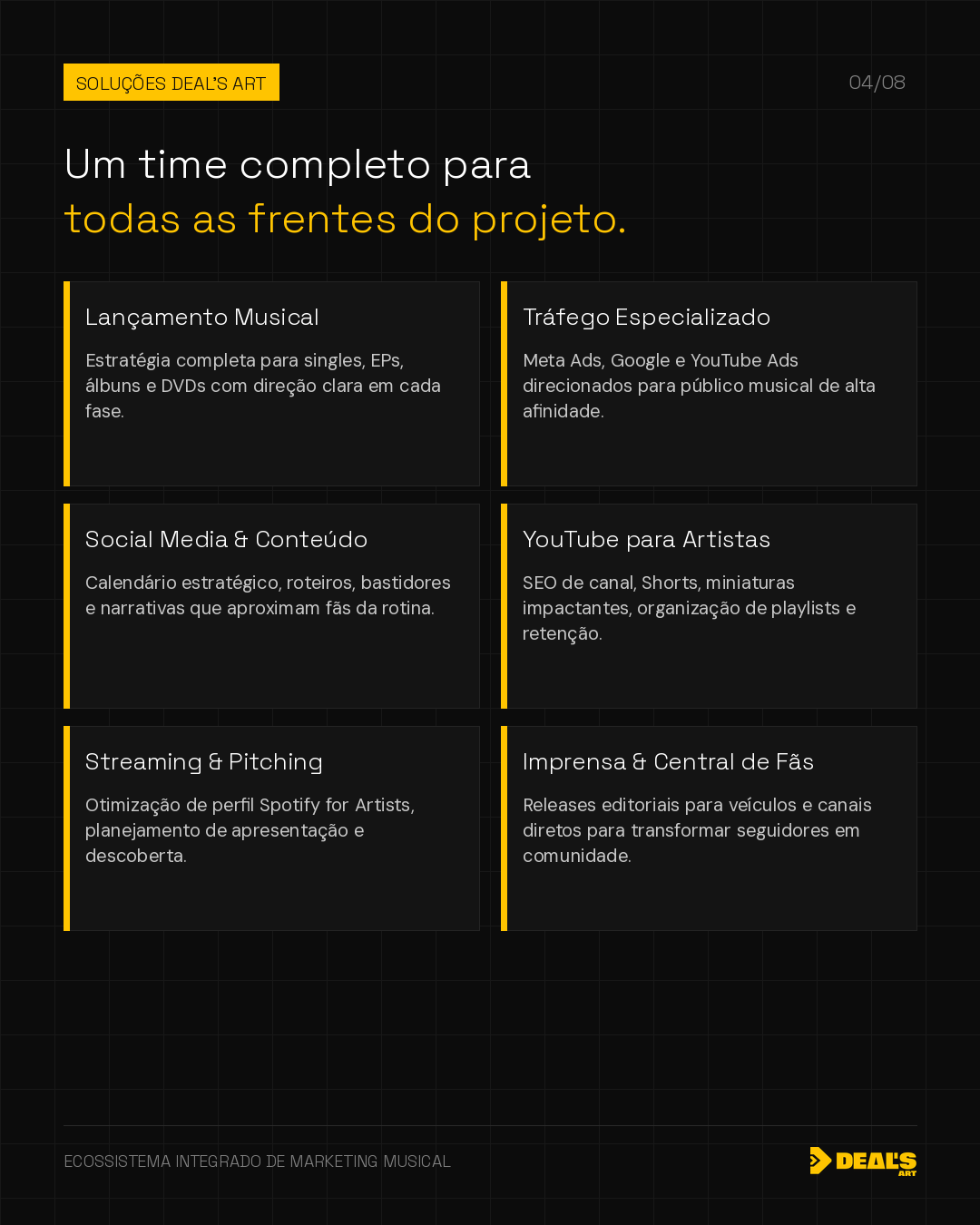
At Deal's Art, we work with artist teams and record labels to structure intent research that informs titles, topics, and editorial priorities before recording. We offer deliverables focused on practical production use: video briefs, guided scripts, and an editorial calendar prioritized by detected intent. We do not promise guaranteed results; we explain possibilities and trade-offs based on context and execution. If needed, we can discuss the scope and provide a proposal aligned with your project and resources.
A consistent strategy connects creativity, context, and relationships. If you want to organize your next cycle with an integrated perspective, Deal's Art can help define the project's priorities.
Present my project