Negotiating with partners, labels, and platforms requires a visual identity aligned with your commercial proposal. Without clear criteria, proposals become vague and decisions risky. Defining the scope before requesting a quote reduces rework and makes it easier to compare suppliers. This article explains how to structure a request for proposal for a visual kit focused on commercial use.
Why a visual kit designed for commercial negotiations matters
A visual identity designed for negotiations is more than aesthetics: it is a positioning tool for proposals, press releases, and presentations to labels and brands. When cover art, static assets, and motion share guidelines, your message is more cohesive in commercial evaluations. Providing materials ready for use in playlists, channels, and press kits makes it easier to communicate with decision-makers. Investing in an organized kit helps reduce delays and revisions when closing deals.
Essential kit components: what to include in the proposal request
Request a clear description of the deliverables: cover art (single, EP, album), platform versions, motion design for teasers and short clips, and an asset system (banners, press kit, social media assets). Also request specifications for formats, resolutions, and variations (vertical, square, widescreen). Include a requirement for editable source files and basic application guidelines. This avoids surprises and ensures the materials can be used in different commercial contexts.
Scope, timelines, and revisions: how to set expectations
Set realistic timelines and stages: briefing, mood boards, drafts, alignment, and final delivery. Agree on the number of versions and revision rounds included in the proposal to control costs and schedule. Ask about interim deliverables that can be used in presentations to partners. Clarifying these points before accepting a proposal reduces rework and improves project predictability.
Budget and pricing models: practical questions for the supplier
Ask for a price breakdown by item and project phase, including any additional costs for motion or specific formats. Ask about payment policies, timelines, and out-of-scope revisions. Request information about who retains rights to the source files and about licensing for images, typefaces, and music used in motion. Understanding these elements helps you compare proposals without relying only on the total amount quoted.
Criteria for hiring or carrying out the work professionally
Evaluate portfolios for work with commercial applications similar to your target market; look for consistency between the visual presentation and presentation materials. Ask for references or case studies that demonstrate delivery processes and the ability to adapt to demanding briefs. Review the contract for clarity: scope, deliverables, revisions, intellectual property, and timelines. Verify technical expertise in motion (demo reels) and the ability to produce files in the formats required by streaming and media platforms.
Why consider Deal's Art for your proposal request
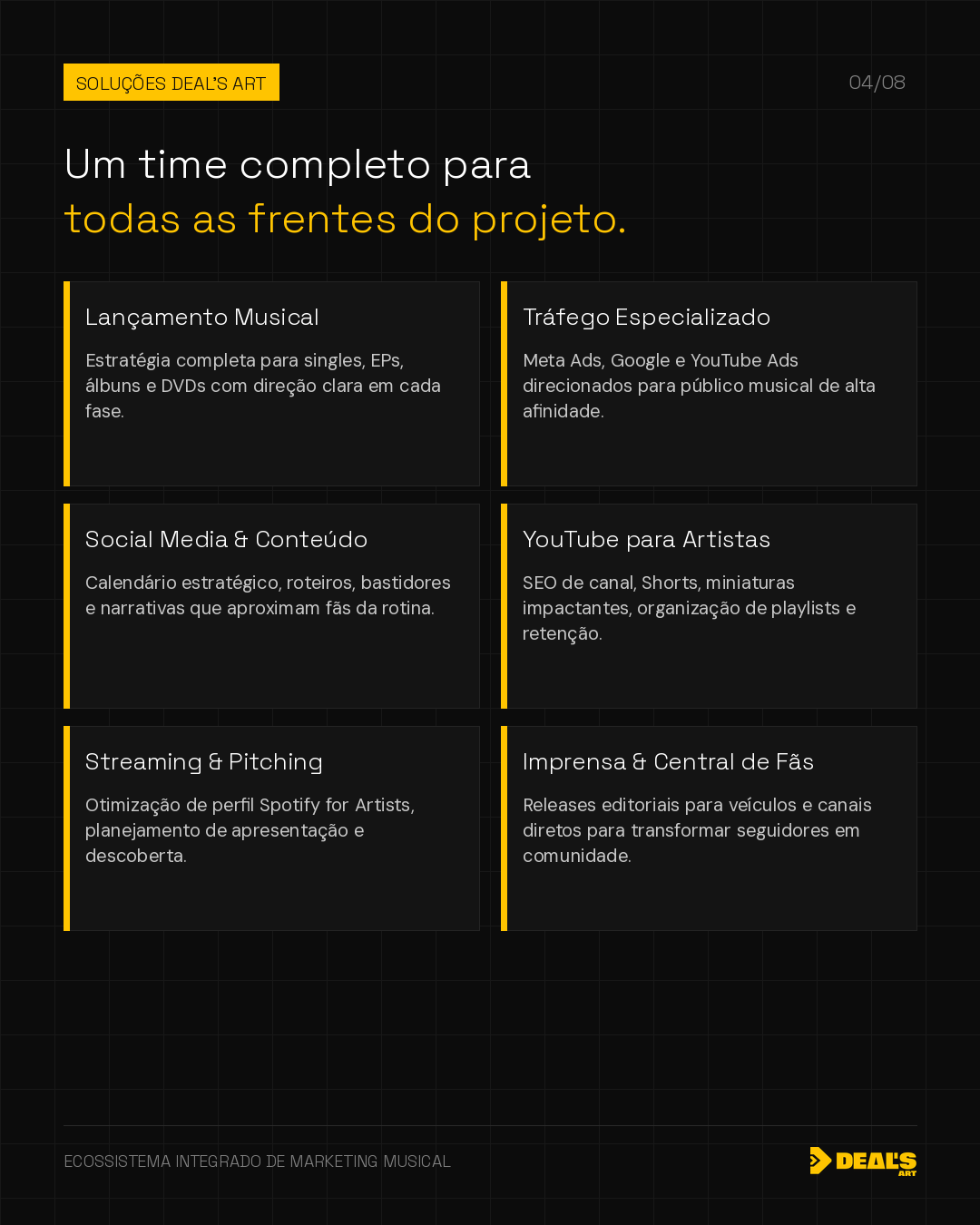
Deal's Art works in design and visual identity for artists and labels, with experience creating kits that include cover art, motion, and asset systems. We can help structure the brief, define the scope, and prepare a proposal that clearly outlines deliverables and formats. Without promising specific results, we offer a process guided by commercial needs that makes it easier to evaluate suppliers. For more complex contractual or legal questions, we can refer you to specialized professionals.
A consistent strategy connects creativity, context, and relationships. If you'd like to organize your next cycle with an integrated view, Deal's Art can help define the project's priorities.
Present my project