
Artists and teams with multiple points of contact often face conflicting messages when dealing with the press, undermining opportunities and delaying responses. A lack of clarity about who speaks on music, business, or scheduling creates confusion and discomfort in interviews, press releases, and follow-ups. Defining a spokesperson map is a practical step toward greater clarity and faster media relations. In this article, I explain how to structure these roles, set response boundaries, and prepare the team to handle urgent media inquiries professionally.
Why assign spokespeople by topic
Assigning spokespeople by topic prevents the same person from answering questions outside their remit, reducing contradictions and loss of credibility. Journalists look for clear, quick answers; having a designated point of contact makes fact-checking easier and builds trust in the source. In addition, when each topic has a clearly assigned owner, it is easier to compile detailed, accurate responses. This division also makes it easier to prepare for interviews in advance and manage public messaging.
Essential categories: music, business, and scheduling
Define at least three categories: music (artistic vision, repertoire, and creative process), business (contracts, rights, partnerships, and commercial strategy), and scheduling (dates, show logistics, and interview availability). For each category, identify who has the knowledge and authority to respond and who should be consulted before any public position is taken. In small teams, one person may take on multiple roles, as long as boundaries and consultation procedures are clear. Documenting these categories prevents improvised responses under pressure.
How to formalize boundaries and approval workflows
Create a simple document listing the lead, backups, contact channels, and maximum acceptable response time for each category. Establish approval workflows for sensitive topics: who needs to review a statement and how quickly. Train spokespeople to use language aligned with the project and to signal when a question should be redirected. Review processes periodically to reflect changes in the team, schedules, and communications priorities.
Practical preparation: scripts, Q&A, and media training
Prepare scripts and standard answers to frequently asked questions in each category, along with a Q&A covering points to avoid and key messages. Hold mock interviews with different types of journalists to test workflows and identify information gaps. Provide basic presentation training to anyone serving as a spokesperson, including how to handle off-the-record conversations and when to hand off a question. These materials make responses faster and more consistent without eliminating authenticity in interviews.
Criteria for hiring or delegating press relations
When evaluating a hire, consider experience working with artists and understanding of the music industry, a track record of relationships with cultural press, and the ability to structure the team's internal processes. Check whether the press team offers spokesperson mapping, response materials, and media training, as well as a clear protocol for urgent situations. Ask about communication models between the press team and the artist's team and how responsibility boundaries will be defined. Request references or examples of processes, and align expectations about service hours and content approval procedures.
How Deal's Art can help your team define spokespersons
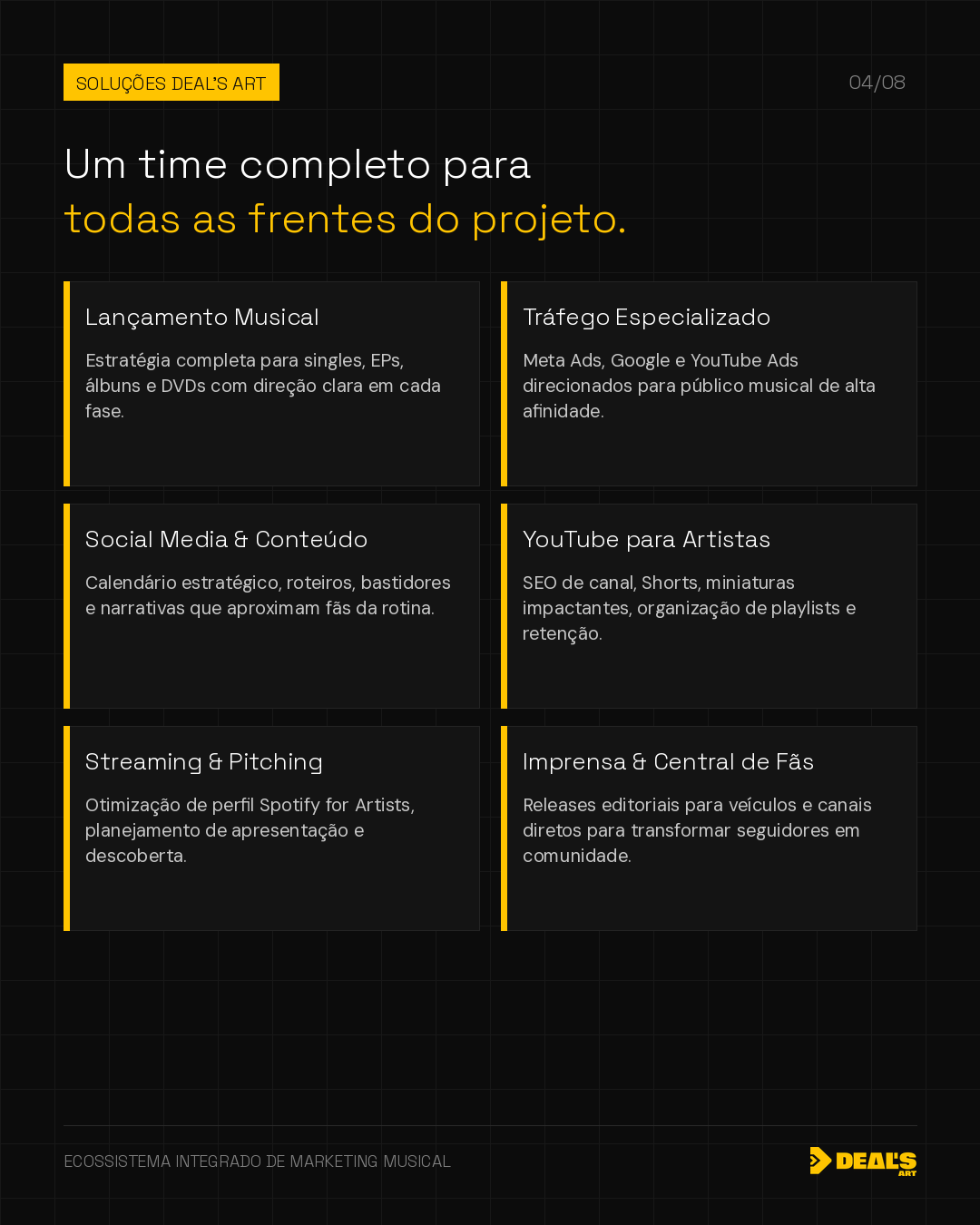
Deal's Art provides press services for artists and can support you in creating a spokesperson map, documenting workflows, and providing practical team training. We can define roles, develop Q&As, and run mock interviews, always tailoring the scope to the project's size and needs. For pricing, contracts, and rights, the scope depends on the project; specific questions may require detailed contractual guidance from specialized professionals. Request a press services proposal so we can assess how to integrate this work into your current workflow.
A consistent strategy connects creativity, context, and relationships. If you'd like to organize your next cycle with an integrated perspective, Deal's Art can help define the project's priorities.
Present my project