Community teams have direct revenue-generating potential, but many teams work without a clear structure, overburdening staff and missing commercial opportunities. Turning interaction into sales requires defined roles, repeatable processes, and goals aligned with the product and audience. The urgency comes from competition for attention and the need to monetize fans sustainably and respectfully. This article presents an operating model for projects of different sizes, reducing friction and increasing qualified conversions.
Architecture of essential roles
Define clear responsibilities to prevent overlap and burnout: community manager, content strategist, direct sales lead, data analyst, and fan support. Each role should have measurable deliverables—for example, a conversion funnel, engagement playbooks, and response SLAs. In small teams, combine roles with explicit rules for priorities and dedicated time. Documenting responsibilities reduces friction and makes it possible to scale as demand for sales grows.
Workflows that connect interaction to purchase
Map fan journeys through to the transaction: discovery, engagement, qualification, offer, and post-sale. Use clear triggers (messages, exclusive events, paid content) and decision points where the sales team steps in. Standardize messages and templates to speed up responses without losing personalization. Integrate CRM, e-commerce tools, and automations to record interactions and prioritize hot leads.
Operational goals aligned with the funnel
Define KPIs that translate activity into value, such as conversion rate by campaign, average time to conversion, and revenue per activated fan. Set goals by role and channel, with weekly review cycles for tactical adjustments and monthly cycles for strategy. Use targeted goals to avoid an exclusive focus on vanity metrics. Transparent goals help the team prioritize actions that truly affect sales of tours, merchandise, and subscriptions.
Tools and integrations to scale without increasing headcount
Choose a lean set of tools with native integration with the CRM and payment platform: message automation, ticket management, analytics, and storefront. Prioritize integrations that enable revenue attribution by campaign and a unified fan record. Configure automations for repetitive routines—segmentation, follow-up, and paid-content delivery—while preserving human resources for high-value interactions. Document workflows and keep an up-to-date repository for quick onboarding.
Criteria for hiring or outsourcing key functions
Evaluate candidates and vendors based on proven experience with arts communities and the ability to measure commercial impact, not just engagement. Look for specific skills: CRM operations, conversion copywriting, merchandise campaign management, and sales logistics coordination for tours. Check case studies, internal processes, and SLA policies; favor those who demonstrate discipline in documentation and automation. Consider outsourcing repetitive operational functions when hiring and training costs outweigh the strategic benefit.
Why build a structure with specialized support and how Deal's Art can help
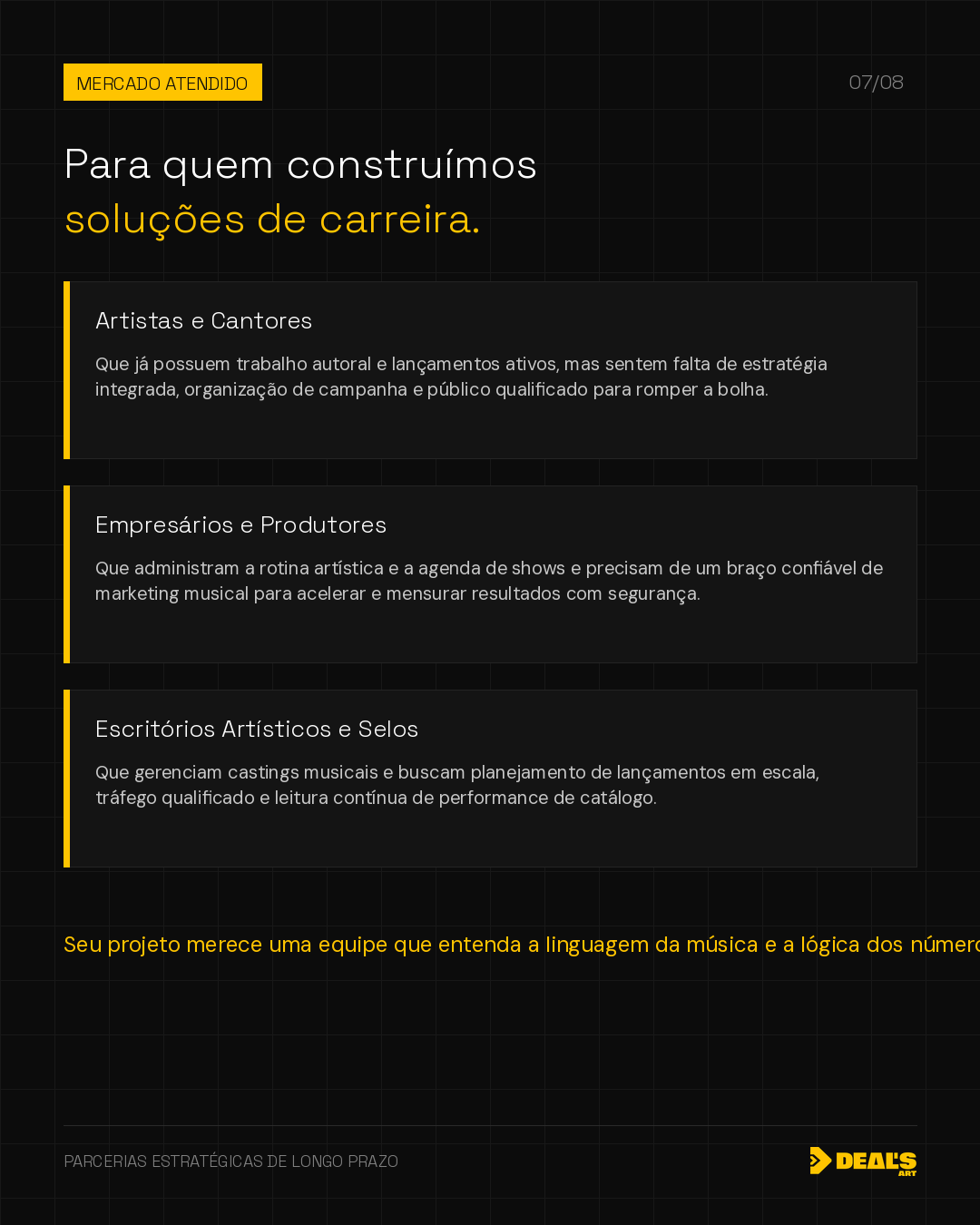
Many projects stall because of a lack of process, scattered data, and undefined roles; this creates friction between community and revenue. Deal's Art offers an operational assessment and implementation proposal to structure roles, workflows, and metrics, adapting the model to your project—from solo artists to record labels. We do not promise guaranteed results; we provide a professional, actionable methodology aligned with your budget and scope. For questions about contracts, rights, or prices, we recommend consulting specialists specific to your project.
A consistent strategy connects creation, context, and relationships. If you want to organize your next cycle with an integrated perspective, Deal's Art can help define your project's priorities.
Present my project