
Artists and their teams face the challenge of appearing in competitive editorial windows such as festivals, commemorative dates, and themed special features. Without a calendar aligned with the news cycle, opportunities are lost because of poor timing or insufficient materials. Organizing windows and content in advance increases the likelihood of fitting into seasonal coverage, but it requires editorial discipline and coordination between the publicist, artist, and label. The urgency lies in the calendar: many outlets plan coverage weeks or months in advance, so preparation needs to start now.
Understand outlets' editorial calendars
Every outlet has its own cycles: weekly coverage, monthly schedules, seasonal special features, and festival programming. Research pitch deadlines, closing dates, and preferred formats (interview, press release, photo shoot, playlists, etc.). Keep an up-to-date list of contacts and recurring schedules for the outlets most relevant to your audience. This map provides the basis for defining windows and prioritizing efforts.
Define editorial windows based on goals and resources
Editorial windows are periods when you activate communications around specific topics: a release, tour, commemorative date, or magazine special. Choose windows that align with realistic goals and available materials: there is no point competing for a feature if you do not have aligned content. Plan your resources: a press kit, photos, videos, and testimonials that make the journalist's job easier. Prioritize quality and consistency over the number of actions.
Create content ready to fit seasonal coverage
Produce versatile materials that can be adapted to different coverage formats and lengths. Useful examples include press releases focused on seasonal angles, themed press kits, dossiers of interesting facts, and format suggestions for the newsroom. Offer ready-to-use assets: images at editorial resolution, audio teasers, and short pitch ideas. Well-prepared materials reduce friction for journalists and increase the chance they will use them.
Timing and follow-up: when and how to contact journalists
Approach journalists far enough in advance to match the pitch deadline: generally weeks for articles and up to months for major special features. Send the main materials in a clear, concise first contact; follow up selectively, adding new assets or relevant angles. Avoid sending too many messages and favor follow-ups that give the journalist something new. Record contacts and responses to adjust future windows.
Practical criteria for hiring or carrying out publicity
Evaluate experience with artists and seasonal coverage, asking for examples of processes (not guaranteed results) and work references. Check operational capacity: press-kit production, contact management, deadline tracking, and the ability to adapt materials to different formats. Consider transparency around price and scope; complex projects may require a contract with a timeline and deliverables. For questions about contracts, image rights, or clauses, consult a legal professional or music business specialist.
How Deal's Art can support your calendar without promising results
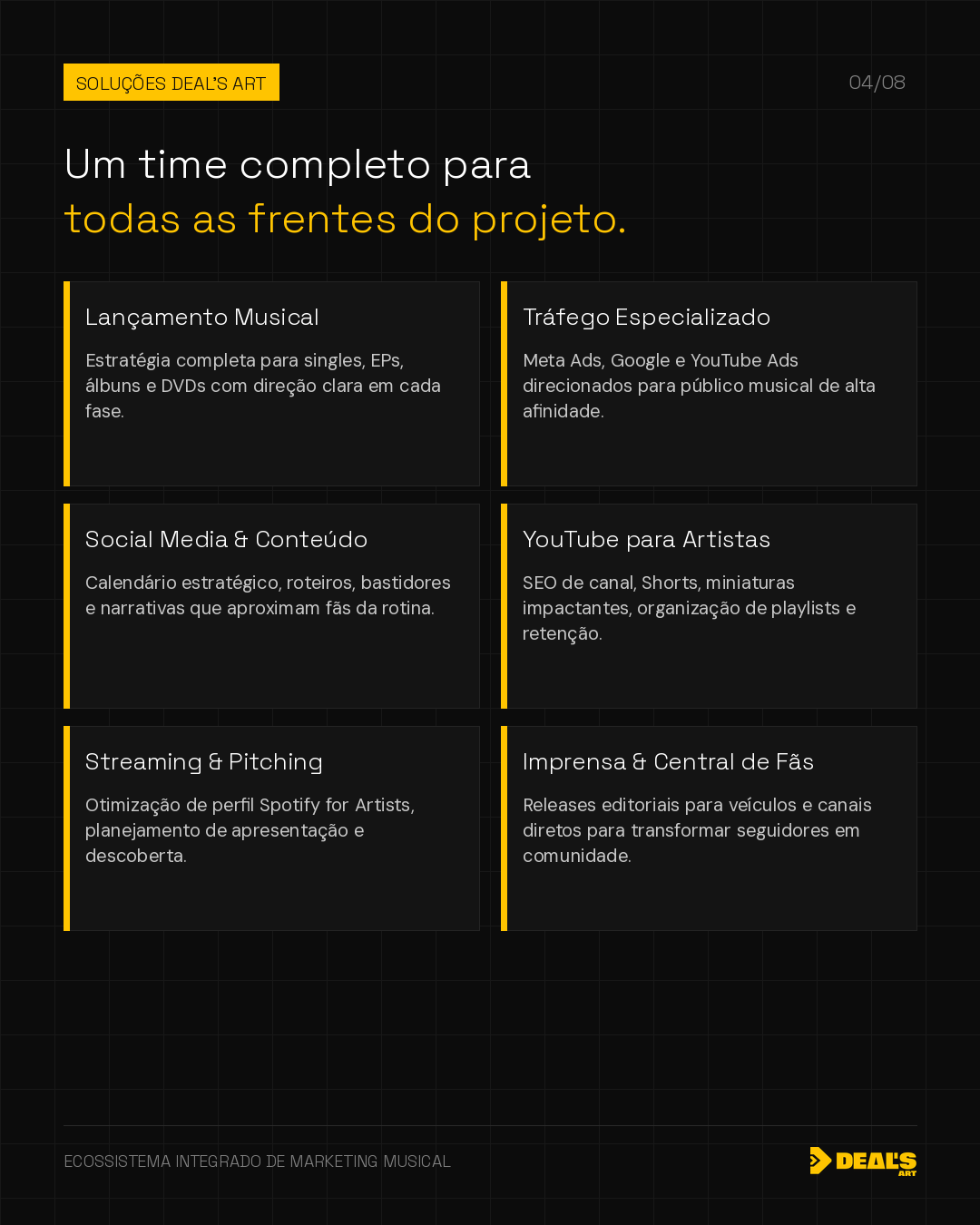
Deal's Art works on building editorial calendars, producing adaptable materials, and coordinating contacts and follow-ups focused on seasonal and special features. We can align timing, formats, and assets with your artist team or label, offering a tailored proposal based on the project's scope. We do not promise coverage or automatic results; we explain possibilities, risks, and practical approaches based on the context and execution. If you wish, we can present an action plan and deliverable options for your editorial window.
A consistent strategy connects creativity, context, and relationships. If you want to organize your next cycle with an integrated perspective, Deal's Art can help define your project's priorities.
Present my project