
Launching a press release at the wrong time drastically reduces the likelihood of converting bookers, licensing agencies, and brands. Many artists and labels treat announcements as standalone pieces without mapping commercial windows and stakeholder priorities. This creates noise, lost opportunities, and strained relationships. Organizing a calendar based on editorial timing and buyer audiences is essential to turning communication into a qualified pipeline.
Why schedule releases around commercial windows
Commercial windows are periods when decision-makers are more receptive—for example, programming pre-seasons, festival booking cycles, or brand briefing windows. Scheduling releases eliminates sporadic sends, enables audience segmentation, and makes it easier to coordinate promotional activities and launches. With a calendar, you can synchronize materials, the press kit, and the artist’s availability for interviews or showcases. This reduces rework and makes internal priorities clearer.
Mapping stakeholders and their interest triggers
Identify key stakeholders: bookers, licensing agencies, brands, media programmers, and curators. For each one, record the triggers that motivate them—festival season, seasonal campaigns, catalog needs, or branded content. Prioritize contacts according to their decision-making windows and response history. This mapping guides the content, tone, and timing of the release, as well as when to follow up and when not to push, so you don’t damage the relationship.
Release content template by stakeholder
Adapt the same core news story with variations: for bookers, highlight logistics, the technical rider, audience history, and show proposals; for licensing agencies, highlight themes, available rights, the mood board, and potential uses; for brands, point out image synergies, target audiences, and activation formats (brand activations, sponsored content). Include specific calls to action: a meeting proposal, a link to the press kit, performance videos, and available dates. Clear, concise messages make outreach more effective.
How to build a tactical editorial calendar
Set a planning horizon (at least six months) and create monthly or quarterly windows based on market cycles. Assign each window a commercial objective and a list of priority stakeholders, along with internal owners and production deadlines. Use colors or tags to distinguish announcement types (release, tour, licensing, partnership). Review the calendar monthly to incorporate emerging opportunities and feedback from contacts.
Criteria for hiring or carrying out professional PR services
Look for proven experience in the music industry and knowledge of the buyer audiences you want to reach. Evaluate the portfolio and processes: stakeholder mapping, press kit development, editorial calendar, and tracking metrics. Ask about cost, scope, exclusions, and the service format (retainer, one-off project, or per release); remember that changes to pricing, rights, and contracts depend on the project and may require specialist review. Require clarity about contact channels, responsibility for follow-up, and pre-send approval procedures.
Why align your calendar with Deal's Art
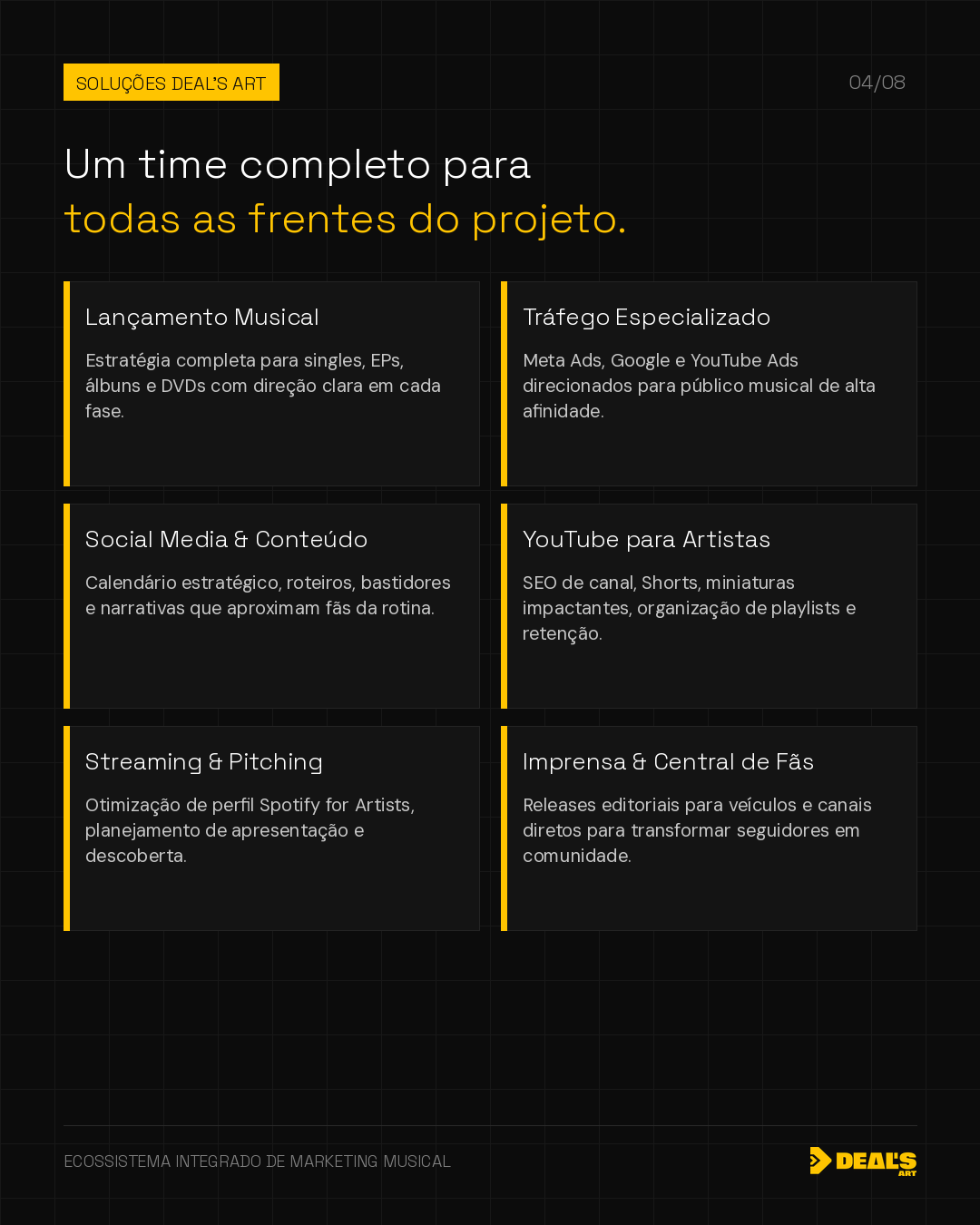
Deal's Art takes a strategic approach to scheduling and building relationships with buyer audiences in the music industry. We can map the commercial windows relevant to your project, adapt content for each stakeholder, and create an operational workflow for executing releases. We do not promise specific results; we offer a methodology and professional execution to make your communications more predictable. To discuss a calendar tailored to your context, I propose a planning meeting.
A consistent strategy connects creativity, context, and relationships. If you want to organize your next cycle with an integrated perspective, Deal's Art can help define your project's priorities.
Present my project