
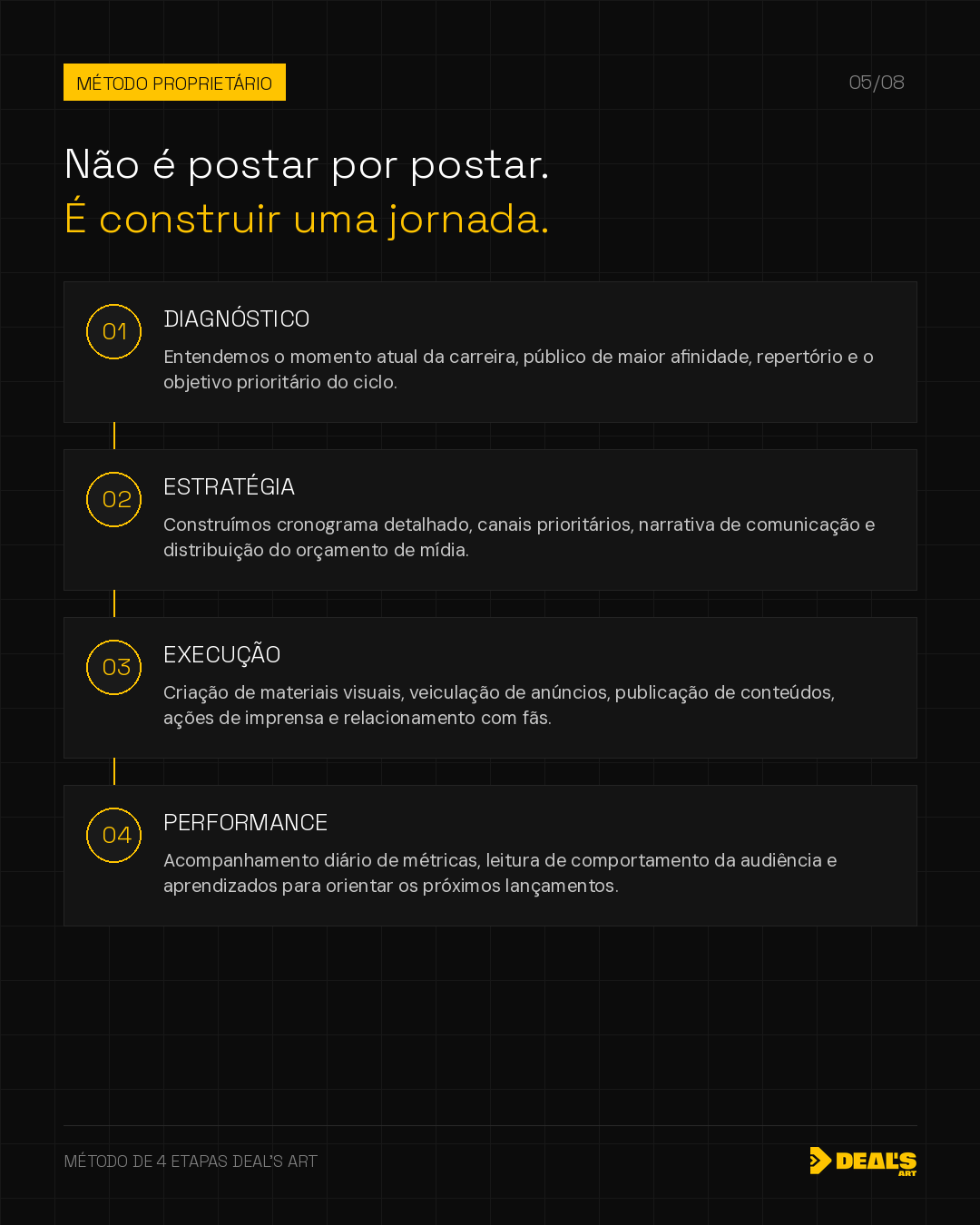
When a song doesn’t achieve the expected results, the explanation is rarely a single post or a single platform. Performance is the result of a combination of preparation, storytelling, frequency, distribution, and follow-up after release.
Start with the goal
Before looking at likes, ask what the release was meant to do. Was it intended to introduce a new artistic chapter, expand the listener base, bring people to a show, or strengthen an existing community? Without a clear goal, any number can seem insufficient—or too good—without actually guiding the next decision.
Check whether the story was easy to understand
The audience needs a reason to pay attention now. The lyrics, creative process, music video, collaboration, career stage, and artist’s context can all serve as entry points. If the communication only said that the track was available, it probably missed the chance to build anticipation.
Look at distribution, not just posting
The same content doesn’t need to appear in the same way on every channel. A short video can spark curiosity; a longer post can deepen the story; WhatsApp can bring you closer to fans who already follow your work. The focus is on creating complementary ways into the music.
Don’t wrap up the project on release day
The release is the start of performance analysis, not the finish line. See which content generated saves, replies, visits, and repeat listening. Use what you learn to adjust upcoming materials, create new edits, and keep the track alive in the weeks that follow.
A consistent strategy connects creation, context, and relationships. If you want to organize your next cycle with an integrated perspective, Deal's Art can help define the project’s priorities.
Submit my project