Tours and merchandising require a visual identity that is coherent and adaptable to physical and digital formats. Inconsistencies lead to extra costs, production friction, and difficulty scaling assets for different markets. A modular system reduces rework and streamlines approvals, but depends on well-defined aesthetic and technical decisions. Implementing this system urgently helps avoid waste under tight deadlines and ensures professional deliverables throughout the tour.
What is a modular visual identity system
A modular system organizes visual components: typography, palette, grid, graphic elements, icons, and motion resources, so they can be combined across different applications. Instead of creating every asset from scratch, the team uses predefined modules that maintain consistency and speed up production. The system also documents variations for specific formats: album covers, digital banners, video templates, and items such as T-shirts, laminated products, and accessories. Modularity makes it possible to adapt the identity to different scales without losing the project's visual character.
Art direction: hierarchy, aesthetics, and physical applications
Art direction defines the visual principles that guide how the modules are used: image treatment, color grading, margins, and composition. For tours and merchandising, it is important to consider both impact at a distance (onstage and on a shirt) and readability on small screens. This involves testing contrast, safety margins, and clear space for labels, patches, and specialty printing. The documentation includes application examples to ensure consistency among the print producer, T-shirt factory, and stage crew.
Motion: templates, transitions, and technical deliverables
Animated elements should follow clear rules: duration, easing, loopability, and use of vector or raster assets. Optimized motion templates reduce post-production time and allow in-house editors to update content without compromising the look. It is critical to define exports for specific platforms: resolutions, codecs, transparency, and frame rates, and provide parameterized versions for subtitles and language variations. Integration between static files and motion should be part of the package, with technical guidance for software and the editing pipeline.
Merchandising pieces: materials, production, and safety margins
Merchandise production requires adapting visual modules to manufacturing processes: screen printing, embroidery, DTG, sublimation, and heat transfer require adjustments to color and detail. The system should provide high- and low-detail versions to accommodate the technical limitations of each method. It is also important to document bleed areas, minimum logo sizes, and color tolerances for production batches. Anticipating these points reduces rework and last-minute decisions during the tour.
Practical criteria for hiring or carrying out the project
Review portfolios with a focus on projects that combine art direction and technical deliverables for live events and physical products. Ask for documentation of a visual system or style guide already put into practice, along with examples of editable motion templates. Confirm which files will be delivered (fonts, vectors, comps, After Effects templates or alternatives) and the export formats for print and video. Check deadlines, included revisions, and responsibilities for adjustments in outsourced production; contracts and rights should be aligned if they require legal counsel. Prefer teams that present a clear workflow among the designer, motion designer, and production supplier.
Why consider Deal's Art for this scope
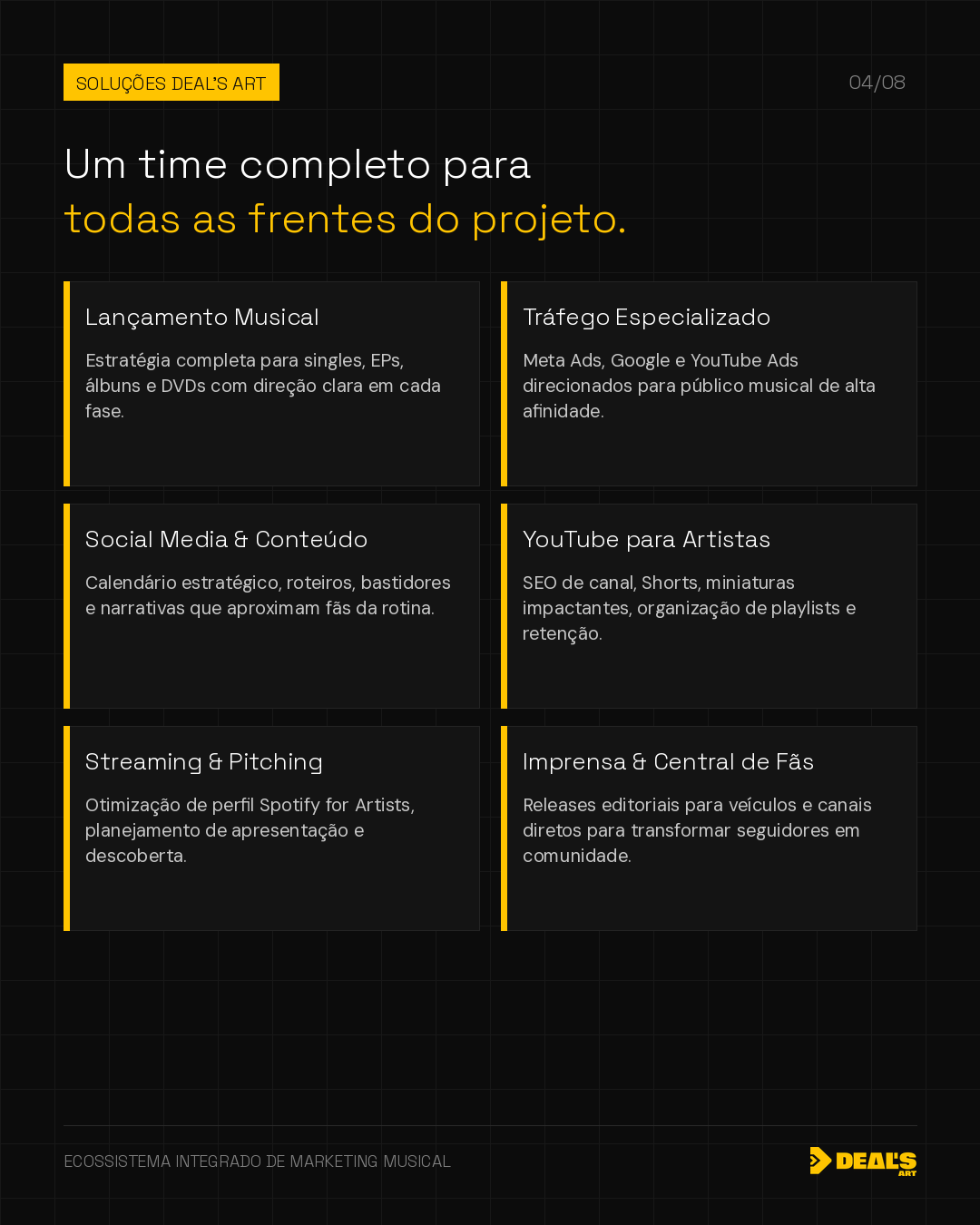
Deal's Art creates visual identities designed for tour and merchandising scenarios, bringing together art direction and motion with technical delivery. We can map out requirements, propose a modular system, and define deliverables adaptable to digital and physical formats based on the project. Scope, price, and schedule depend on the artist's requirements and the complexity of the pieces; specific questions about rights and contracts may require a legal specialist. Requesting a conversation makes it possible to assess options and present a proposal aligned with your context.
A consistent strategy connects creativity, context, and relationships. If you want to organize your next cycle with an integrated perspective, Deal's Art can help define the project's priorities.
Submit my project