
Investing in ads without clear criteria often leads to repeated spending without useful learning. Many artists approve another round of media based only on the feeling that something has changed, without comparing the objective, audience, and creative. This leads to decisions based on vanity metrics, not results that can be applied to the project. Knowing what questions to ask when reviewing a media report helps avoid waste and guides better tests.
Diagnosing the problem: what is wrong with the report
Before approving more budget, ask whether the report answers the essential questions: what was the campaign objective, how was the audience defined, and which creatives were tested? Also check whether the metrics presented are actionable or merely numbers that look good. If the report does not connect the objective, audience, and creative, the decision is based on isolated impressions and clicks. An honest diagnosis helps prevent repeating mistakes.
Deciding whether to change approach: when to approve another round
The decision to continue should depend on tested hypotheses, not intuition. Decide whether the next round will keep the same objective, adjust the audience, or change the creative based on what worked during the test window. Plan clear alternatives: stop, retarget, or review creatives and measurement. Without this documented change of approach, there is little to learn from media spending.
What the ebook teaches: practical, straightforward guidance
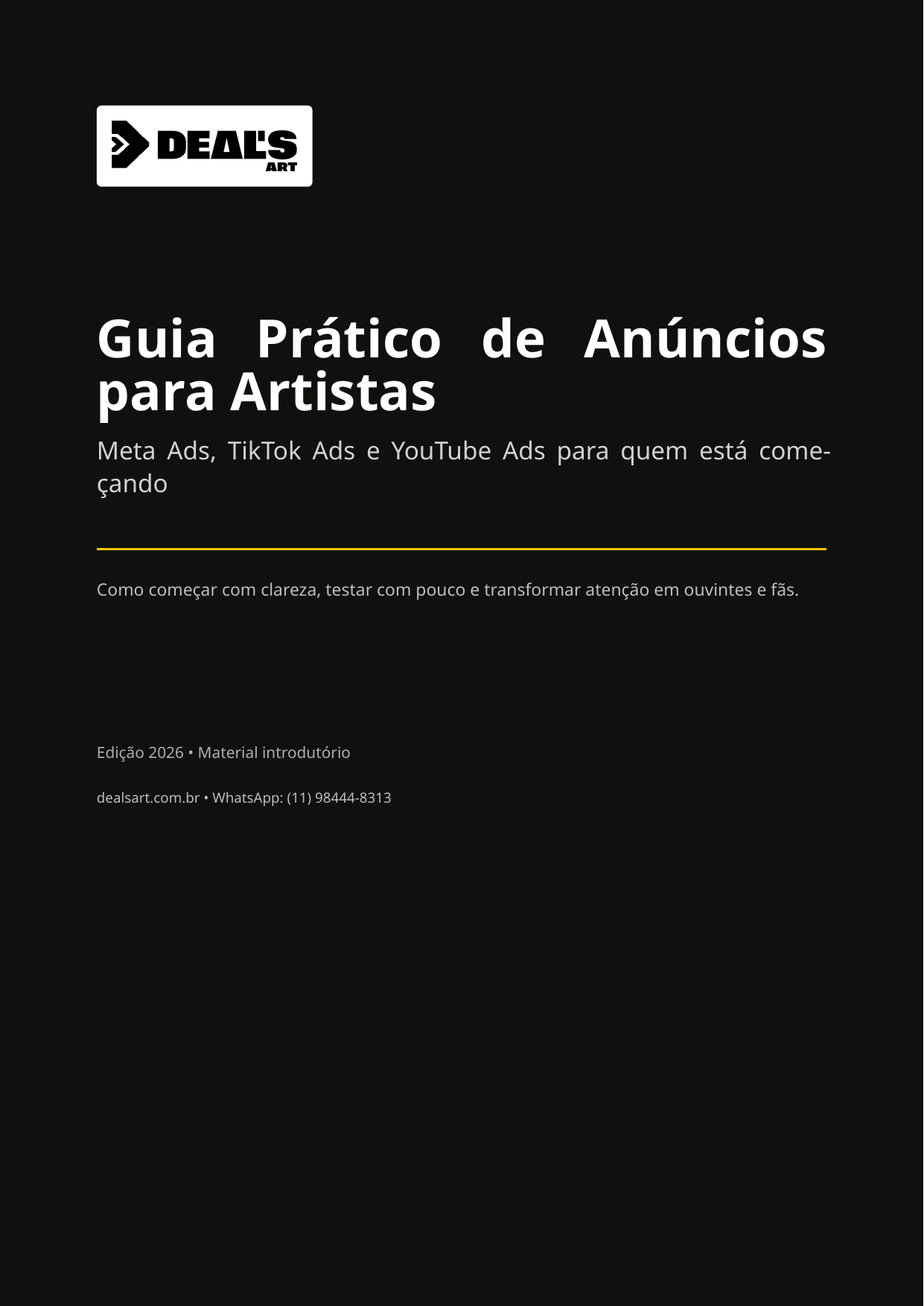
The Practical Guide to Ads for Artists explains, in simple language, how to set up tests and read reports in Meta Ads, TikTok Ads, and YouTube Ads. It shows how to structure a 7-day test plan and which metrics to avoid—especially vanity metrics. The ebook also details how to align the objective, audience, and creative so that reading the results leads to clear decisions.
Practical application: how to use the questions day to day
Use the questions in the report to build an approval routine: define the objective, select audiences, document creatives, and run the 7-day test plan. At the end of the cycle, compare the results with the hypotheses and decide on the next action based on relevant metrics. This procedure helps turn reports into a roadmap for continuous optimization, rather than a justification for spending more without clear criteria.
Who this material is for
The Practical Guide to Ads for Artists was designed for independent artists, bands, producers, and small teams that need to make media decisions with limited resources. It is also useful for anyone managing campaigns on Meta Ads, TikTok Ads, or YouTube Ads who wants a simple process for testing ideas. If you approve ads and need to justify every expense with clear questions, this material is relevant to you.
Commercial conclusion: evaluate your media before investing again
When reviewing a media report, ask the right questions about the objective, audience, creative, and interpretation of results before approving another round. The Practical Guide to Ads for Artists offers simple language, instructions for Meta Ads, TikTok Ads, and YouTube Ads, and a 7-day test plan to guide decisions beyond vanity metrics. Buy the guide to evaluate your media and structure more useful tests—with no promise of automatic results.
A consistent strategy connects creation, context, and relationships. If you want to organize your next cycle with an integrated perspective, Deal's Art can help define the project's priorities.
Present my project