
Many channels miss opportunities by failing to connect high-reach Shorts with long-form content that delivers deeper value. When visits generate short views but do not direct audiences to albums, full videos, or releases, traffic is leaking and needs immediate attention. This article presents a strategic plan to audit and reprogram Shorts, titles, thumbnails, and SEO in order to analyze drops in visits and redirect audiences. The urgency comes from the pace of consumption: rapid testing and signal-based decisions are essential to make the most of release windows and avoid wasting reach.
1. Signal diagnosis: which metrics to prioritize
Start by evaluating CTR (click-through rate), average retention, retention by segment (0–7s, 7–30s), traffic sources, and the videos that generated the views spike. Compare the performance of Shorts that achieved organic reach with those that did not drive visits to the channel. Identify content, timing, and format patterns that influence viewers' initial behavior. These signals show where you can intervene without making wholesale changes to the catalog.
2. Strategic grouping: criteria for creating series and playlists
Group Shorts into series based on search intent, topic, artist, or release phase, prioritizing narrative cohesion and a logical path to the long-form content. Use criteria such as main topic, format (teaser, behind-the-scenes, hook), tone (educational, performance), and traffic source data. A well-defined series makes it easier to create thumbnails and titles that signal continuity and encourage clicks through to the full video. Optimized playlists help the algorithm understand the relationship between fragments and long-form content.
3. Republishing and on-page optimization recommendations
Before republishing, standardize titles with hooks that signal continuity and add textual and visual CTAs pointing to the long-form content. Update thumbnails to identify the series and its purpose (teaser vs. full version), and adjust descriptions with clear links and timestamps for the main video. Reassess tags and channel SEO to align short- and long-tail intent keywords. Republishing should be selective: prioritize Shorts with good organic reach but a low click-through rate to the channel, or with retention that suggests interest in more content.
4. Tactical calendar for controlled testing
Build a 4–8 week calendar with A/B testing cycles for titles, thumbnails, CTAs, and publishing times, isolating one variable per experiment. Set signal goals (for example, an increase in CTR from Shorts to the long-form video page or a percentage increase in channel retention) and cutoff points for validating changes. Document results and apply learnings in batches to reduce noise. Include specific windows close to releases to protect momentum and prioritize content with commercial impact.
5. How to hire or execute: criteria for choosing a team or provider
Look for teams with an operational track record on YouTube, data analysis capabilities (YouTube Analytics/BigQuery), and clear A/B testing and asset version-control processes. Check for hands-on experience optimizing titles, thumbnails, and playlist structures, as well as the ability to integrate strategies with release schedules. Request demonstrations of previous audits and testing methodologies, and favor providers that deliver short-term tactical plans and execution roadmaps. For contractual matters, rights, and investment, assess the scope on a project basis and consider consulting a lawyer or specialist when necessary.
6. Practical connection with Deal's Art
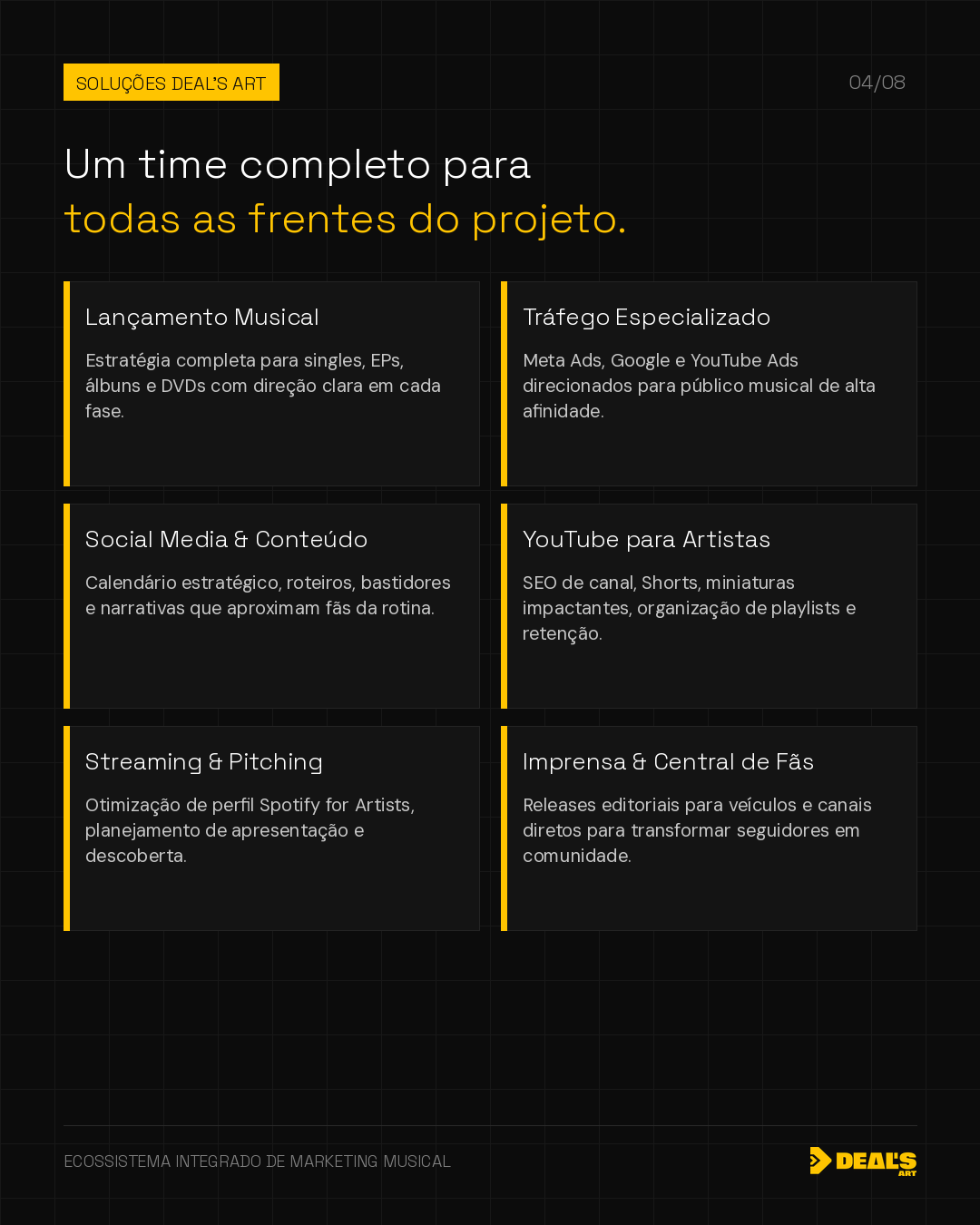
At Deal's Art, we work on operational YouTube audits for artists and labels, focusing on reprogramming Shorts and optimizing titles, thumbnails, and SEO to create clear paths to long-form content. We can map priority signals, build series, and run controlled tests on a tactical schedule aligned with releases. We do not promise automatic results; we offer structured technical execution and data-based recommendations to support decisions. For specific questions about pricing, contracts, or rights, a detailed brief will allow us to prepare a tailored proposal.
A consistent strategy connects creation, context, and relationships. If you want to organize your next cycle with an integrated perspective, Deal's Art can help define the project's priorities.
Present my project