
Receiving a pitch rejection is common, but mishandling it can close important doors. Teams working with the press need to turn this frustration into relationship-building insight. Acting quickly and strategically protects the artist's reputation and keeps channels active. The priority is to avoid impulsive responses and establish a process that captures lessons learned while keeping the dialogue open.
First step: document the rejection in detail
When you receive a rejection, document who responded, the reason given, the date, the outlet, and the tone of the message. This record prevents context from being lost in future interactions and helps identify patterns when several rejections cite the same reason. Also include the content of the proposal you sent and the terms proposed at the time. An organized file makes it easier to choose future approaches and adjust timing or positioning.
Respond professionally and remain open
Send a brief, courteous reply thanking them for getting back to you and confirming that you understand the reason for the rejection. Avoid lengthy arguments or attempts to reverse the decision at that moment; they can strain the relationship. Offer to stay in touch and provide additional information if the journalist's focus changes. The message helps preserve the relationship while showing respect for the editorial team's time.
Analyze the feedback and adjust the pitch
Turn the reason for the rejection into a potential area for improvement: was it the timing, the format, a lack of data, or a pitch that did not align with the outlet's audience? Bring the team together to reassess the angle, supporting materials, and possible alternative spokespeople. If multiple rejections follow a similar pattern, prioritize strategic adjustments before resending. This step turns feedback into practical learning without ineffective persistence.
Maintain an active relationship without pressure
Stay relevant to the journalist by sharing useful resources, such as images, updated press kits, or better-aligned ideas for future pitches. Send occasional, targeted communications, avoiding excessive volume or generic messages. Interactions at events, on professional social networks, and through polite follow-ups help keep your brand in mind without becoming a nuisance. The goal is to be useful and memorable, not pushy.
Criteria for hiring or carrying out professional PR
Consider experience in music and cultural media, proven relationships with priority outlets, and the ability to align strategically with the project. Evaluate proposals that clearly define the scope: media mapping, preparation of materials, follow-up contacts, and policies for responding to rejections. Check references and ask for examples of follow-up processes and documented learnings. Remember that pricing, timelines, and rights depend on the project's scope; specific questions may require legal or contractual advice.
Why talk to Deal's Art specialists
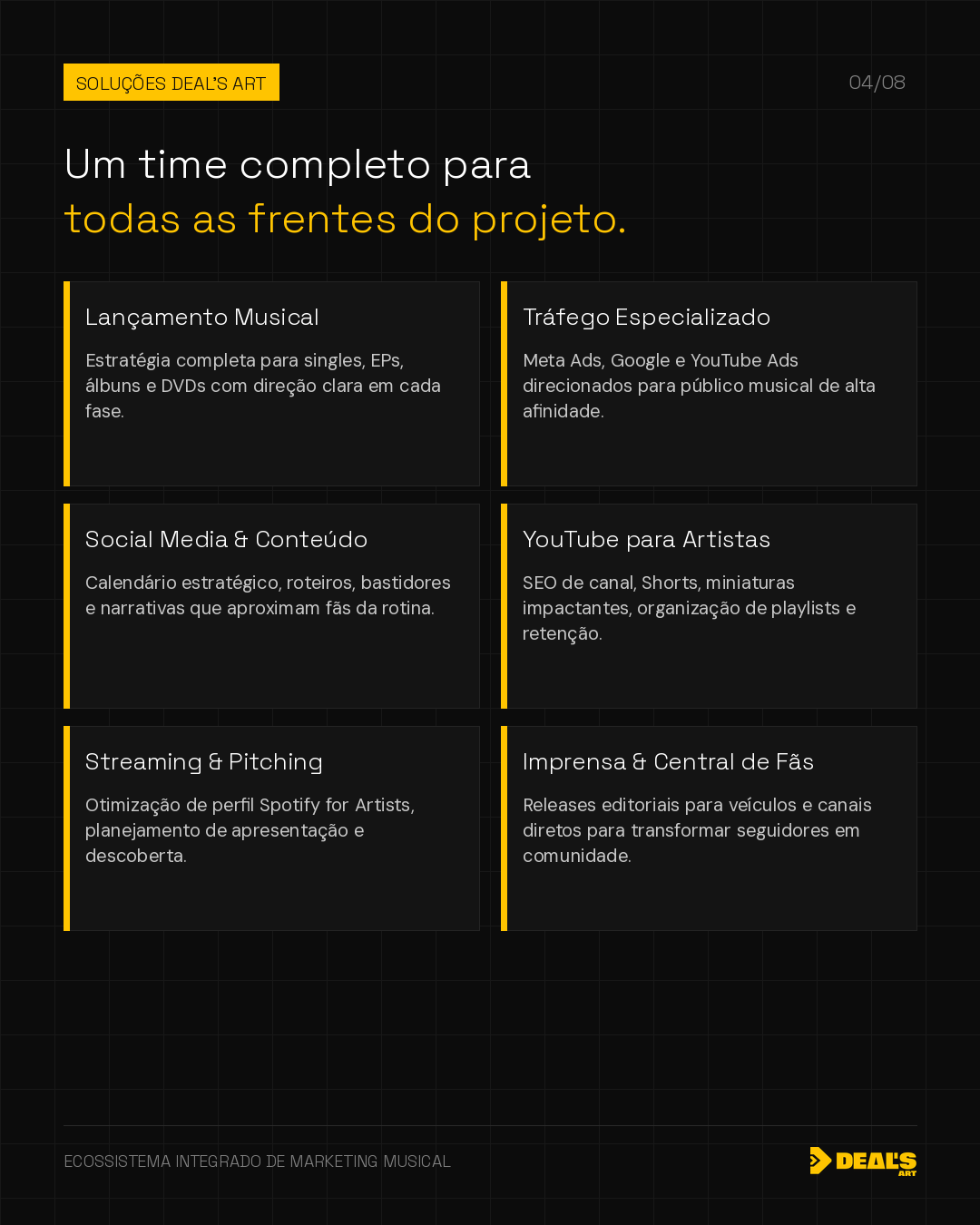
Teams facing recurring rejections can benefit from a structured process for following up and building relationships with media outlets. Deal's Art focuses on music and the press, offering workflow assessments, materials reviews, and outreach strategies that preserve relationships. If you'd like to review your process and discuss how to improve follow-ups without overburdening journalists, we can talk about media relations.
A consistent strategy connects creativity, context, and relationships. If you'd like to plan your next cycle with an integrated perspective, Deal's Art can help define the project's priorities.
Present my project