Producing consistent visual assets for digital and physical campaigns often delays launches and drives up costs. Small teams and tight deadlines require a system that maintains standards without sacrificing speed. Having a scalable asset kit prevents rework, ensures consistency across platforms, and speeds up approvals. The urgency increases during short launch cycles—preparing the system before demand arises is strategic.
Why a visual asset system reduces time and cost
A standardized system brings aesthetic decisions together in reusable components: grid, typography, color palette, and adaptable templates. With predefined assets, creative variation takes place within limits that preserve identity, reducing revisions and rework. This cuts production hours per asset and eliminates the need to create files from scratch for every format. The result is a predictable workflow that makes it easier to scale campaigns with in-house teams or partners.
Essential elements of a kit for multiple formats
The kit should include editable templates for covers, thumbnails, and banners in standard resolutions and aspect ratios (streaming, social media, physical displays). Components such as safe margins, legibility areas, a layer system, and color variations should be documented. Including PSD/AI/FIGMA versions and export guides speeds up work for anyone handling the assets. Metadata and standardized naming prevent errors when uploading files to platforms.
A production process optimized for fast delivery
Define short phases: discovery, kit development, adaptation by format, and final validation. Simple automations—export presets, scripts, or plugins—reduce manual tasks when generating multiple files. Set clear internal deadlines for each stage and objective approval checkpoints to avoid excessive meetings. A workflow aligned with campaign deadlines enables fast delivery without losing quality control.
How to maintain visual consistency during simultaneous campaigns
Create clear visual rules: logo use, typographic hierarchy, image treatment, and alternative versions for content variations. Document exceptions—when to use portraits, when to prioritize legibility over aesthetics—to guide designers and producers. Train partners and freelancers with a best-practices kit and an up-to-date asset folder. Periodic monitoring of assets helps correct inconsistencies before they become a communications problem.
Practical criteria for hiring or carrying out the service
Evaluate portfolios focused on identity applied across multiple formats and ask for examples of delivered kits, even if anonymized. Check technical capabilities: file formats, tools used, and experience with automations and export guides. Ask about delivery timelines for scalable runs and rapid scaling during demand peaks. Confirm the revision policy, ownership of source files, and post-delivery support for adjustments. Also consider compatibility with the artist's, office's, or label's internal workflow.
Why consider Deal's Art to implement your asset system
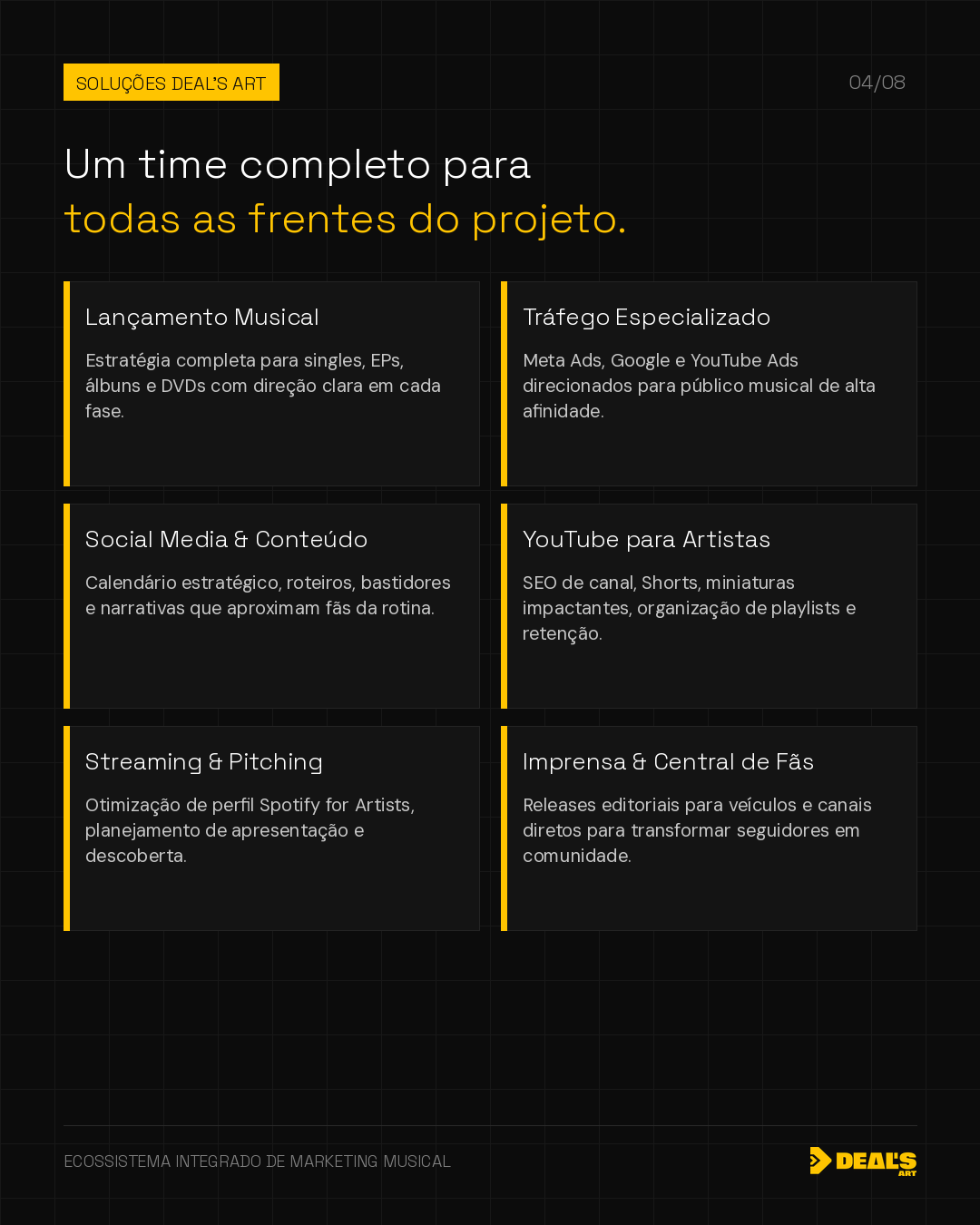
Professional implementation requires a focus on identity, processes, and technical documentation, delivering kits compatible with digital and physical needs. At Deal's Art, we offer design and visual identity services created for artists, labels, and offices that need to reduce production time and costs. We can assess your situation and propose a scope that meets your timelines and format requirements, keeping in mind that scope, rights, and price vary by project. Request a conversation so we can explore the best approach for your case.
A consistent strategy connects creation, context, and relationships. If you'd like to organize your next cycle with an integrated perspective, Deal's Art can help define the project's priorities.
Submit my project