
Complex releases fail because teams are not coordinated and deadlines for essential assets are tight. Without a clear schedule and contingency triggers, delays to stems, videos, or metadata compromise distribution, communication, and monetization. Larger projects require specific buffers and designated owners for each deliverable. An urgent schedule audit can identify critical points before they lead to costs and rework.
Complete mapping of assets and critical deadlines
Start by listing all the assets you need: final audio, stems, videos, images, press kit, content scripts, and metadata. For each item, set deadlines for internal review, revisions, and delivery to platforms or external suppliers. Identify the minimum time windows needed for technical quality checks (audio quality control, video subtitling, image treatments). As you map everything, include dependencies between assets that could create bottlenecks, such as a final master that blocks stems and metadata.
Contingency triggers and operational buffers
Implement objective triggers that activate contingency plans: missing the master deadline, files being rejected by the distributor, or the videomaker becoming unavailable. Define buffers: extra time built into deadlines: for each critical stage, varying them according to the asset's complexity and the supplier's experience. Create standardized responses for each trigger, with designated owners, alternative resources, and recovery deadlines. This discipline reduces emergency decisions that affect cost and quality.
Responsibilities and approval workflow
Assign a primary owner and a backup for each deliverable, including supplier contacts and preferred communication channels. Document the approval workflow: who reviews, the minimum approval criteria, and how many review rounds are allowed without penalty. Use checkpoints with formal sign-off to release each subsequent stage and avoid uncoordinated parallel work. Transparent responsibilities reduce rework and speed up decision-making.
Integration with the commercial and communications calendar
Align asset release dates with the commercial calendar: announcements, pre-saves, press releases, media campaigns, and shows. Plan windows for upload testing on platforms and metadata synchronization to avoid discrepancies on release day. Also consider deliverables for promotional partners and physical appearances, which require different formats and deadlines. This alignment preserves campaign consistency and prevents a single delay from compromising multiple fronts.
How to hire someone for or conduct a schedule audit
Look for professionals with proven experience in music releases and knowledge of the technical stages (mastering, video delivery, metadata). Ask for examples of schedules they have developed and their methodology for identifying risks and buffers. Evaluate whether the provider offers reusable templates, tracking tools (spreadsheets, project management systems), and the ability to facilitate collaboration between internal teams and third parties. For legal, contractual, or rights-related questions, consider consulting specialists before finalizing the scope.
Why Deal's Art can support your schedule audit
Deal's Art conducts schedule audits and builds asset release calendars tailored to the complexity of the project, with contingency triggers and designated owners. Our work focuses on reducing operational bottlenecks and ensuring clarity around critical deadlines and necessary buffers. We do not promise specific market results; we provide technical and operational diagnosis to improve release execution. If there are contractual, pricing, or rights-related needs, the scope will be defined according to the project and may require additional specialists.
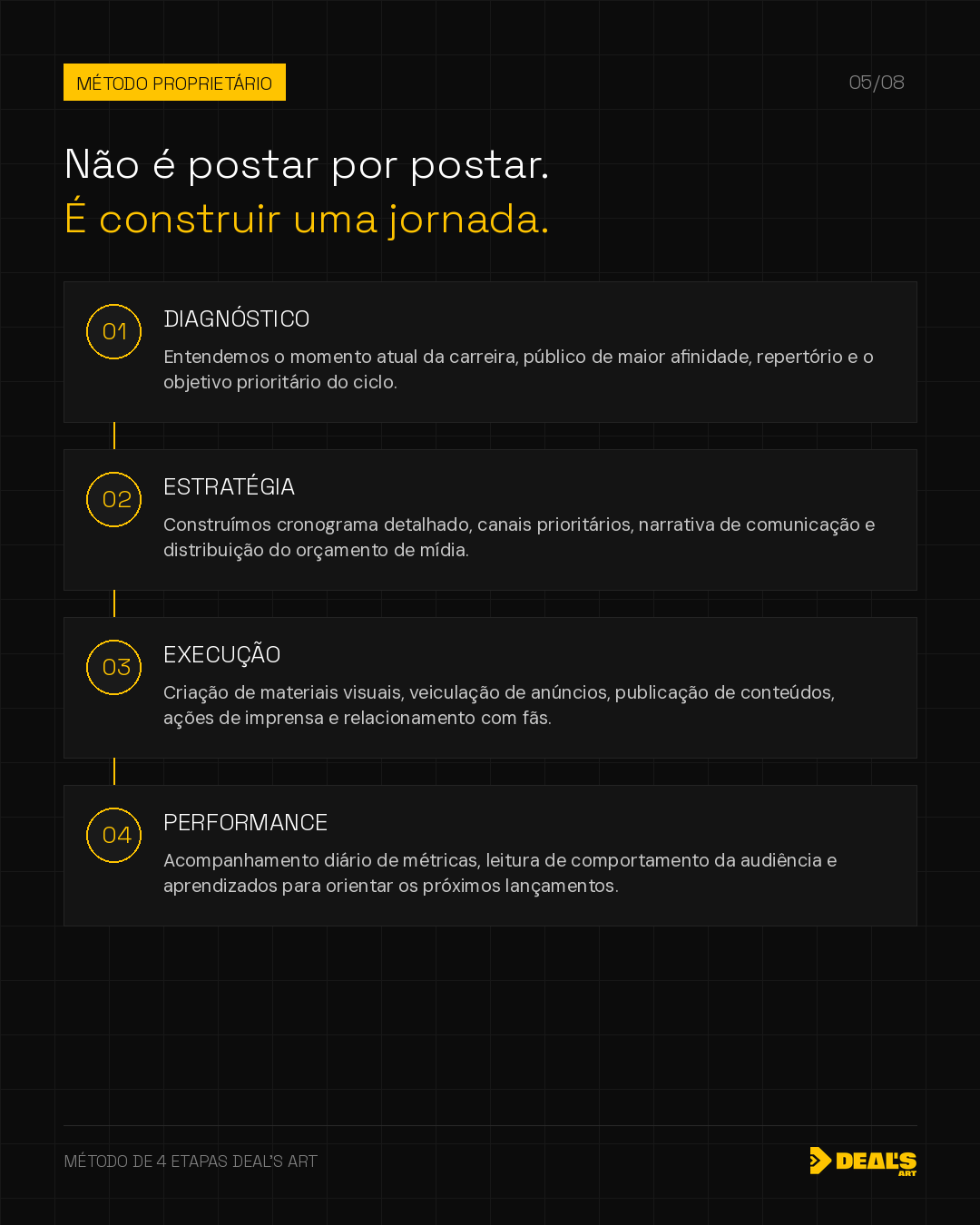
A consistent strategy connects creation, context, and relationships. If you want to organize your next cycle with an integrated view, Deal's Art can help define the project's priorities.
Present my project