
Releases that fail because of coordination problems among distributors, partners, and media create avoidable costs and missed deadlines. Many teams discover conflicts and missing deliverables on the eve of the premiere, when options are limited. A structured operational review reduces uncertainty and allows adjustments to the timeline, communications, and responsibilities. The urgency is practical: the sooner you identify bottlenecks, the more room you have to find solutions and align everyone.
Stakeholder and responsibility mapping
List all essential participants: digital distributor, aggregator, physical sales platform, record label, publisher, producer, press office, content partners, and influencers with a formal commitment. For each party, clearly define who delivers what, in what format, and who approves the final delivery. Document internal and external deadlines, points of contact, and escalation paths for resolving outstanding issues. This map serves as a single point of reference for meetings and reports during pre-launch.
Digital asset and metadata review
Confirm final versions of audio files, stems where applicable, cover art that complies with platform specifications, and supporting materials (biography, press releases, photos). Validate metadata: credits, splits, ISRC, UPC, publishing codes, and required fields for each distributor or partner platform. Test uploads in a staging environment or request a preview when available to avoid rejections or last-minute corrections. Keep a version log and record who approved each asset.
Communications planning with media and partners
Align the embargo calendar, press kit distribution, exclusivity dates, and interview or premiere schedule. Confirm the formats and deadlines requested by journalists, playlist editors, and content partners, and ensure the materials you send meet those requirements. Assign responsibility for follow-ups, responding to requests, and clipping management. Plan contingencies for schedule changes and notify affected stakeholders in advance.
Operational testing and approval workflows
Run simulations of the publication process and approval workflows to identify gaps in technical and communications processes. Tests include sending files to the distributor, validating how cover art and metadata appear, and checking pre-save or pre-order links in production. Document partners' average response times at critical stages to adjust internal deadlines. Record failures and corrective actions to improve future checklists.
Criteria for hiring or delegating professional execution
Define the priorities that would justify hiring outside help: launch complexity, number of partners, international presence, and the need for coordination across multiple time zones. Look for providers with proven experience in technical processes (metadata, ISRC/UPC), project management, and media relations; ask for references and examples of workflows they have managed. Evaluate their communication skills, transparency around timelines, and policies on intellectual property and contracts. Be clear about the scope, deliverables, and revisions before signing for any service.
How Deal's Art supports coordination without promising results
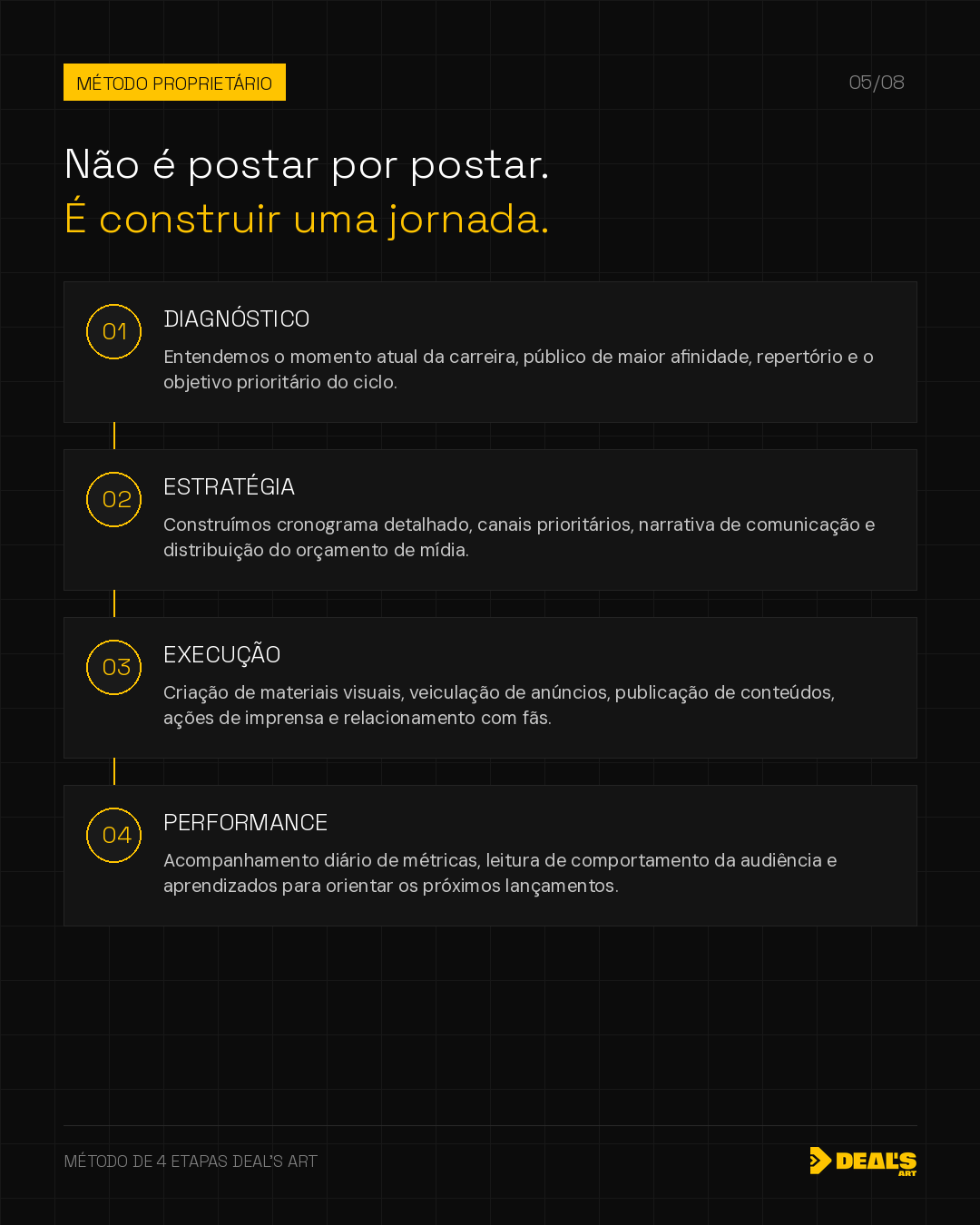
Deal's Art offers an operational diagnosis and timeline review to identify deliverables, bottlenecks, and responsibilities among distributors, partners, and media. In a technical meeting, we map gaps, propose workflow adjustments, and prioritize immediate actions to minimize risks before launch. We clarify that scope, pricing, and contract terms vary by project, and that legal or rights questions may require a specialist. To review timelines and deliverables with an operational focus, we suggest an initial conversation tailored to your project.
A consistent strategy connects creativity, context, and relationships. If you'd like to organize your next cycle with an integrated perspective, Deal's Art can help define the project's priorities.
Present my project