
Simultaneous releases involve multiple parties: a record label, distributor, and agency, each with their own goals, deadlines, and deliverables. A lack of coordination leads to delays, rework, and wasted investment. To avoid calendar conflicts, it is urgent to establish a centralized timeline and clear responsibilities. This article provides a practical guide to aligning the parties and reducing operational risks.
Initial Mapping of Stakeholders and Deliverables
The first step is to identify all parties involved and list required deliverables: creative assets, metadata, masters, contracts, communication materials, and legal approvals. Document the deadlines contracted with the record label and distributor, as well as the agency's campaign milestones. This mapping will reveal dependencies and critical windows where a delay affects every workstream. Having this overview prevents surprises and makes it easier to prioritize when resources are limited.
Creating a Master Timeline with Synchronized Milestones
The master timeline consolidates delivery, review, and release dates across the parties, with clear milestones for each phase: master finalization, metadata delivery, ISRC/UPC registration, asset approval, and pre-save/pre-order. Work backward from the release date to calculate buffer and contingency dates. Include weekly checkpoints and owners for each item to ensure accountability. A visible, version-controlled timeline reduces rework and scheduling conflicts.
Communication Workflows and Approval Protocol
Define official communication channels (email, management platform, meetings) and a single approval protocol for assets and public messaging. Set a maximum response time and the number of acceptable review rounds before escalating decisions. Record all approvals in writing to avoid later disputes over which versions were cleared. Fast communication and a clear protocol are essential to keeping the timeline on track.
Risk Management and Contingency Plans
Identify critical risks: audio delivery failures, contractual discrepancies, metadata rejection by the distributor, or delays in campaign materials. For each risk, establish a mitigation plan with an owner, immediate actions, and execution deadlines. Reserve contingency windows in the master timeline to accommodate technical issues and negotiations. Ongoing monitoring and periodic risk reviews keep the operation resilient.
Criteria for Hiring or Carrying Out Professional Services
When choosing partners or hiring support, assess their experience with simultaneous releases, clarity around deliverables, and ability to integrate with distributor systems and CRM. Ask for process references (not necessarily results) and check policies on intellectual property and responsibilities in case of an error. Prefer teams that work with version-controlled timelines and collaborative tools, and negotiate SLAs for approvals and corrections. For contractual or rights-related questions, consult a legal specialist before signing.
How Deal's Art Approaches Release Coordination
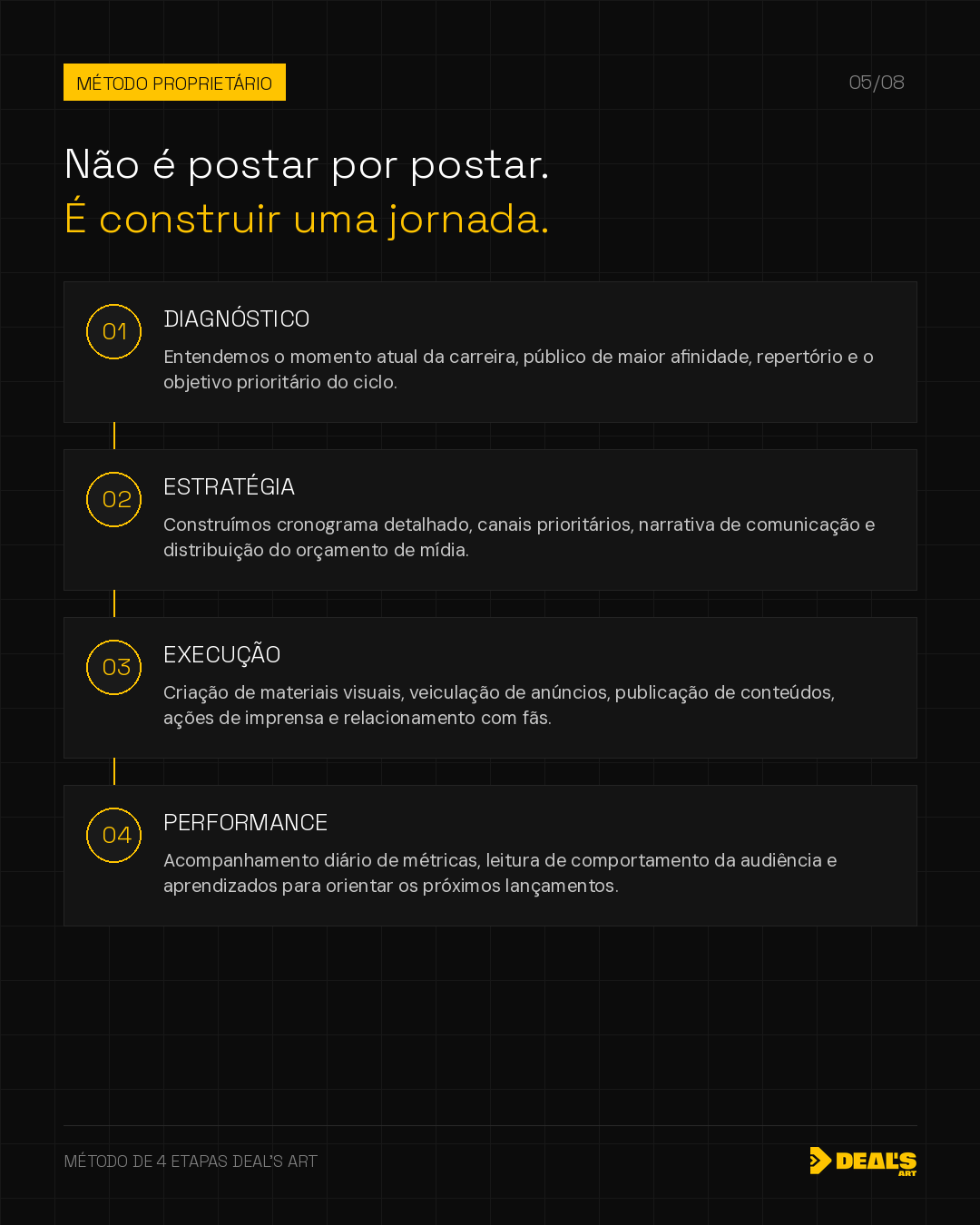
Deal's Art offers music release planning focused on coordination between the record label, distributor, and agency, structuring master timelines and approval processes. Our work is to map deliverables, define responsibilities, and implement communication protocols to reduce operational friction. We do not promise specific market results; we work on process governance so that the parties meet deadlines and deliverables. For complex projects, we can assess the scope and propose an appropriate model for our involvement.
A consistent strategy connects creation, context, and relationships. If you want to organize your next cycle with an integrated perspective, Deal's Art can help define the project's priorities.
Present my project