
Music releases are collections of interdependent deliverables: artwork, audio, video, communications, and distribution do not operate in isolation. Teams that do not map dependencies discover bottlenecks late and spend time reconciling revisions and deadlines. Understanding what needs to happen before each deliverable is urgent to avoid rework and missed opportunities during promotional windows. This article explains how to build a practical dependency matrix and how to use this tool to request professional support more precisely.
What is a dependency matrix, and why does it matter?
A dependency matrix is a chart that connects deliverables, owners, prerequisites, and deadlines. For music releases, it shows, for example, that final mix approval must happen before mastering and that cover art can only be finalized after the final take has been chosen. When clearly laid out, the matrix helps prioritize resources, surface risks, and reduce last-minute back-and-forth between internal teams and vendors. It also allows stakeholders to understand critical sequences without relying on constant meetings.
Essential components of a matrix for music releases
Every matrix should list deliverables, direct dependencies, owners, target dates, and time buffers. Include categories such as audio (recording, mix, master), visual content (photo, cover, music video), metadata (ISRC, credits), distribution (pre-save, aggregator registration), and communications (press kit, playlist materials). Record conditional dependencies—actions that only happen if a particular version is selected—and attach key documents whenever possible. This level of detail makes meetings and requests for professional support more actionable.
How to map real dependencies: practical steps
Start by listing all planned deliverables for the project, then identify who needs to approve each stage and what inputs are required for it to happen. Use a simple tool—a spreadsheet, kanban board, or project management software—and mark precedence relationships (A before B). Set backward-looking deadlines, starting from the target release date and estimating the minimum time needed for each phase. Review the matrix with all critical partners to adjust timelines and responsibilities before tasks begin.
Common risks and how to mitigate them in the matrix
Typical mistakes include failing to account for artists' review time, relying on high-demand vendors, and not having a final version for communications materials. For each dependency, record a Plan B: an alternative vendor, a time buffer, or a decision that can be made without the final version. Identify external dependencies that are calendar-sensitive (festivals, holidays, playlist release windows) and treat them as critical. Documenting risks and responses enables quick decisions when scheduling conflicts arise.
Criteria for hiring or carrying out professional support
When seeking support, assess specific experience with similar releases, the ability to meet deadlines, and transparency in delivery processes. Ask for a portfolio demonstrating coordination across audio, visual assets, and distribution, as well as references regarding adherence to timelines. Check whether the provider is willing to work with dependency matrices and proposes clear checkpoints and defined delivery formats. Also consider how the professional communicates risks in advance and whether they offer alternatives; the budget and contract terms should align with the project scope.
How Deal's Art helps build the matrix without promising results
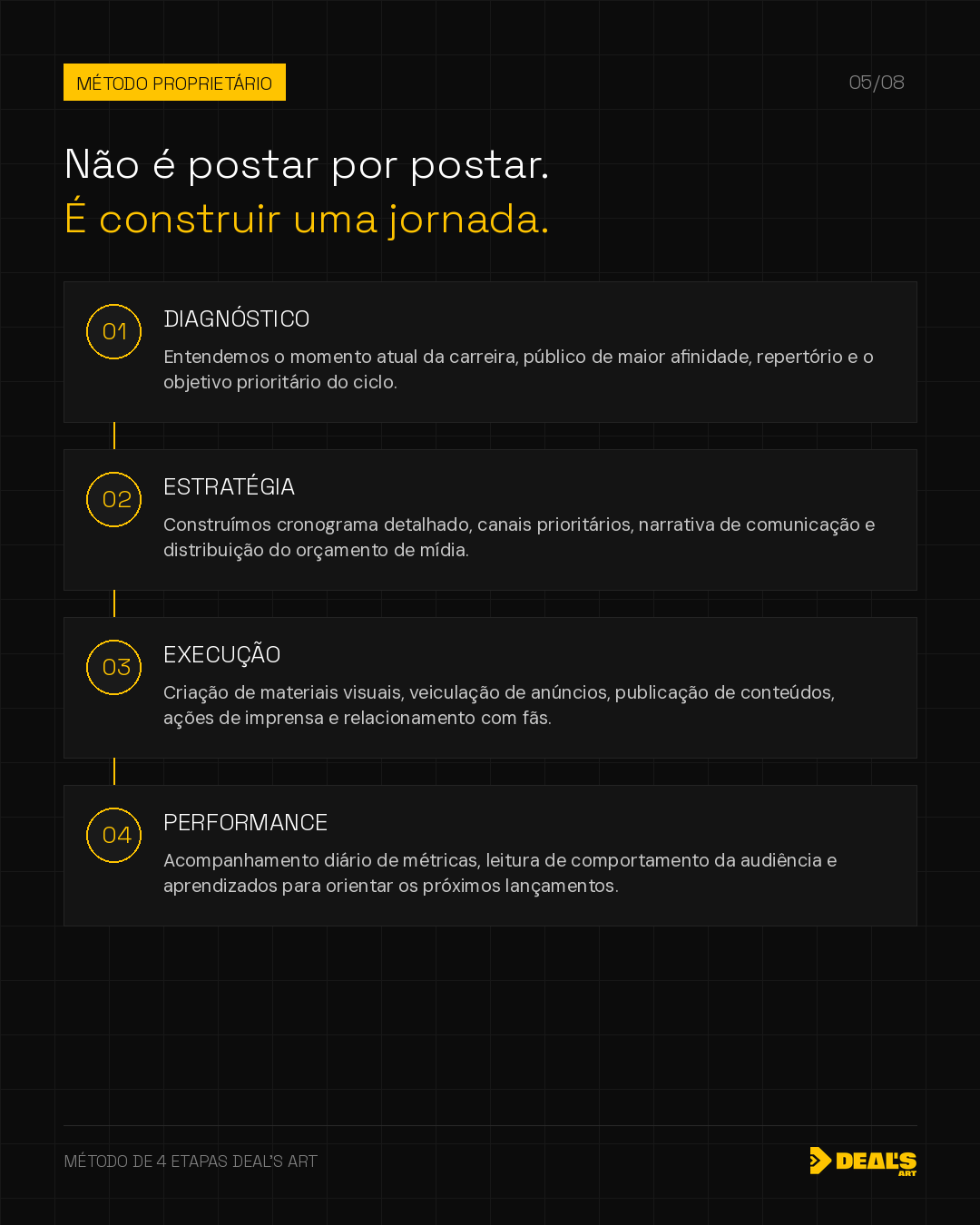
Deal's Art offers release diagnosis and planning focused on mapping dependencies among assets, partners, and timelines according to your context. Our work aims to make planning clearer for artists, labels, and teams by identifying potential points of conflict and resource needs. We do not promise automatic results: the impact of planning depends on the project's decisions, execution, and specific conditions. To assess concrete needs and define the scope and budget, we recommend requesting a release planning diagnosis.
A consistent strategy connects creation, context, and relationships. If you want to organize your next cycle with an integrated perspective, Deal's Art can help define the project's priorities.
Present my project