
Releasing a single seems simple until deadlines, budgets, and strategic decisions start piling up: choosing the final version, setting a date, preparing communications, and coordinating platforms. The pain is real when there is no clarity about what to prioritize or the precise timing needed to avoid wasting investment. Addressing this now prevents rework, lost momentum, and higher costs; professional planning turns scattered effort into execution aligned with concrete objectives.
Diagnose the artistic and commercial goal of the single
Before creating any schedule, define the purpose of the release: to consolidate your image, test a new sound, or capture the attention of curators and industry professionals. Map the qualitative and quantitative indicators that matter to you—engagement, booking opportunities, show placements—and prioritize your goals. This clarity guides where to invest resources and how to measure decisions throughout the process.
Build a reverse timeline with critical milestones
Work backward from the target date and set milestones: finalizing the master, delivering the artwork, submitting to the distributor, starting the pre-save campaign, and beginning pre-release communications. Include buffers for revisions and possible technical delivery issues, such as incorrect metadata or rejected files. A reverse timeline prevents last-minute adjustments and makes it possible to coordinate with media partners and the content team.
Direct investment toward tactical priorities
Distribute the budget among production, visual assets, press relations, and digital amplification according to your goals; do not leave everything to paid promotion without solid materials. Set mandatory technical minimums (a master that meets standards, platform-ready artwork, a clip or lyric video if relevant) before considering paid promotion. This prioritization reduces waste and increases the effectiveness of post-release activities.
Prepare assets and touchpoints that support the narrative
Create materials that tell the single's story: a press release, media kit, updated biography, and short-form social media content. Ensure visual consistency and brief collaborators on the tone and target audiences so that every piece supports the release. Having these touchpoints ready speeds up relationships with the press, bookers, and curation platforms.
Hiring criteria: how to evaluate the people who will do the work
Evaluate providers based on methodological clarity, delivery processes, and transparency about responsibilities and costs; ask for references and examples of timelines, not just results. Review contracts for ownership of materials, deadlines, and clearly defined deliverables to avoid improvisation that leads to rework. Prefer providers who offer modular solutions and execution reports, signs of professionalism and risk control.
How Deal's Art works on single planning—and the next step
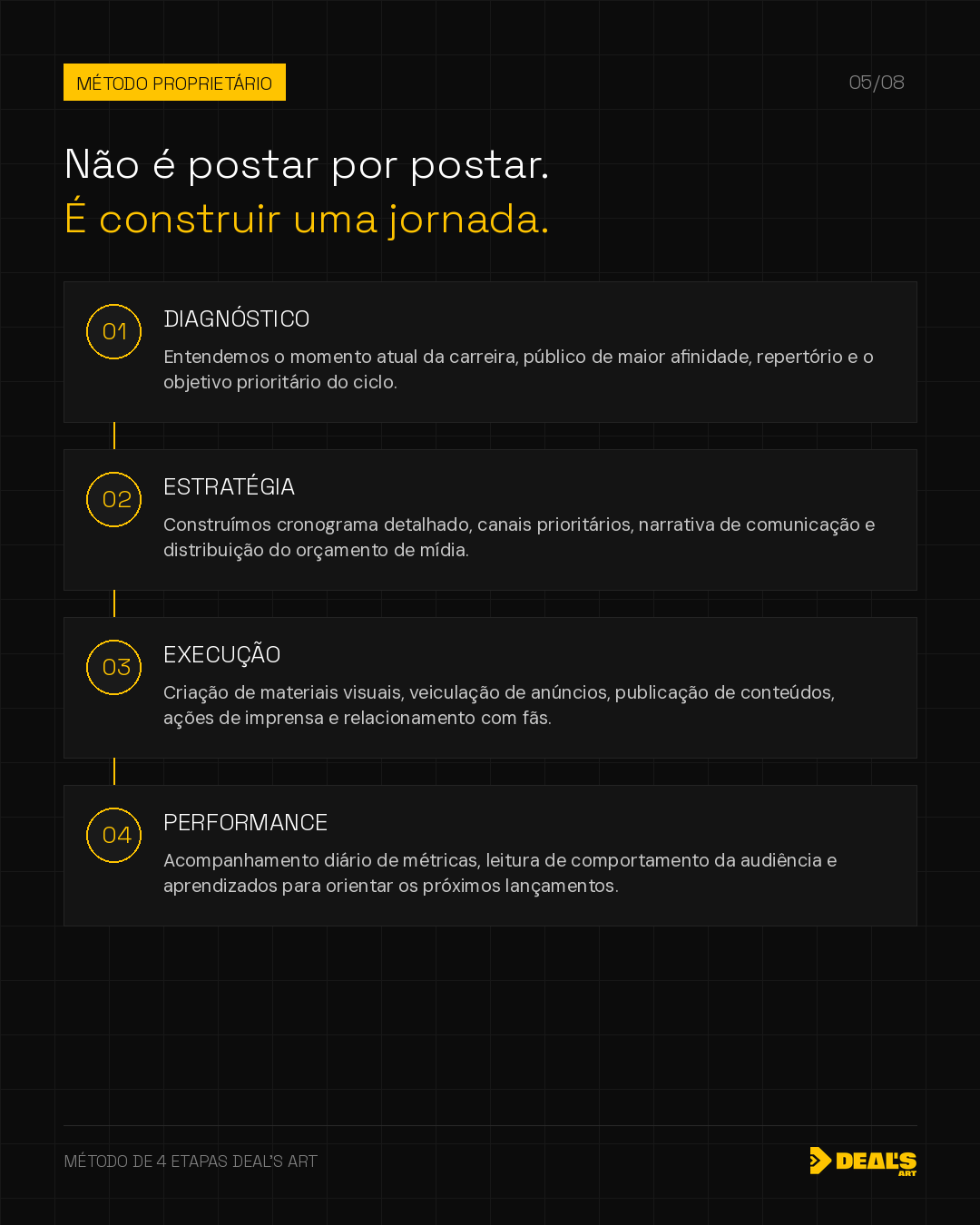
At Deal's Art, we structure planning with an operational checklist, a reverse timeline, and technical validation of assets, adapting the scope to your goals and budget. We do not promise placements or numbers, but we deliver proven processes to reduce errors, optimize investments, and make execution more predictable. If you would like a practical assessment of your single and a detailed plan, let's talk and put together a proposal aligned with the scope and your priorities.
A consistent strategy connects creativity, context, and relationships. If you want to organize your next cycle with an integrated vision, Deal's Art can help define the project's priorities.
Present my project