Simultaneous releases expose weaknesses in asset management: inconsistent metadata, misaligned timelines, and undefined owners. These gaps cause delays, loss of visibility, and rework at critical moments. Clear governance reduces friction and increases delivery predictability, depending on the team’s execution and discipline. If your operation needs to scale releases or synchronize across platforms, acting now can prevent deadline conflicts and costly rework.
Why a governance plan is essential for simultaneous distribution
Simultaneous distribution requires various assets : audio, images, metadata, and marketing materials : to reach different platforms in sync. Without a defined plan, version errors, duplicate entries, and conflicting dates are common. Governance establishes rules, checkpoints, and owners to reduce uncertainty and improve coordination between internal teams and partners. It organizes decisions, responsibilities, and approval paths, making the process auditable and repeatable.
Critical checkpoints and their functions
Define checkpoints that clearly mark project progress: delivery of masters, metadata confirmation, approved visual assets, submission to the distributor, and communications alignment. Each checkpoint should have objective acceptance criteria : for example, files with technical specifications, complete metadata, and images in the required dimensions. Checkpoints help identify risks early and pause the workflow when something does not meet the criteria. This prevents problems from carrying over into later stages.
Assigning owners and responsibilities
Assign a primary owner for each asset and checkpoint, with a clear backup for absences. The owner is responsible for validating criteria, communicating blockers, and submitting corrections within the agreed deadline. For smaller teams, combine roles clearly; in larger organizations, define roles by discipline (A&R, production, marketing, traffic). Document contacts, internal SLAs, and communication channels to reduce friction in urgent decisions.
Approval workflows and version control
Establish an approval workflow that reduces rework: submission, technical review, creative review, and final approval, with deadlines set for each stage. Use version control so you can revert to an approved file without confusion about which version is in circulation. Collaborative tools and history logs help maintain traceability of who approved what and when. Map exceptions and fast-track procedures for last-minute changes.
Criteria for hiring or carrying out professional coordination
Look for professionals or teams with proven experience in editorial calendars and music distribution, who can document processes and take responsibility for checkpoints. Evaluate portfolios of similar projects, workflow tools, and discipline in managing deadlines; ask for examples of governance plans and checkpoint templates, without expecting guarantees of results. Consider compensation by scope and phase, clearly defining deliverables, limits of responsibility, and the need for technical specialists when complex questions about rights and contracts arise. For matters involving rights negotiations, international contracts, or corporate structures, consult a lawyer or specialist before hiring.
How Deal's Art supports implementation without promising automatic results
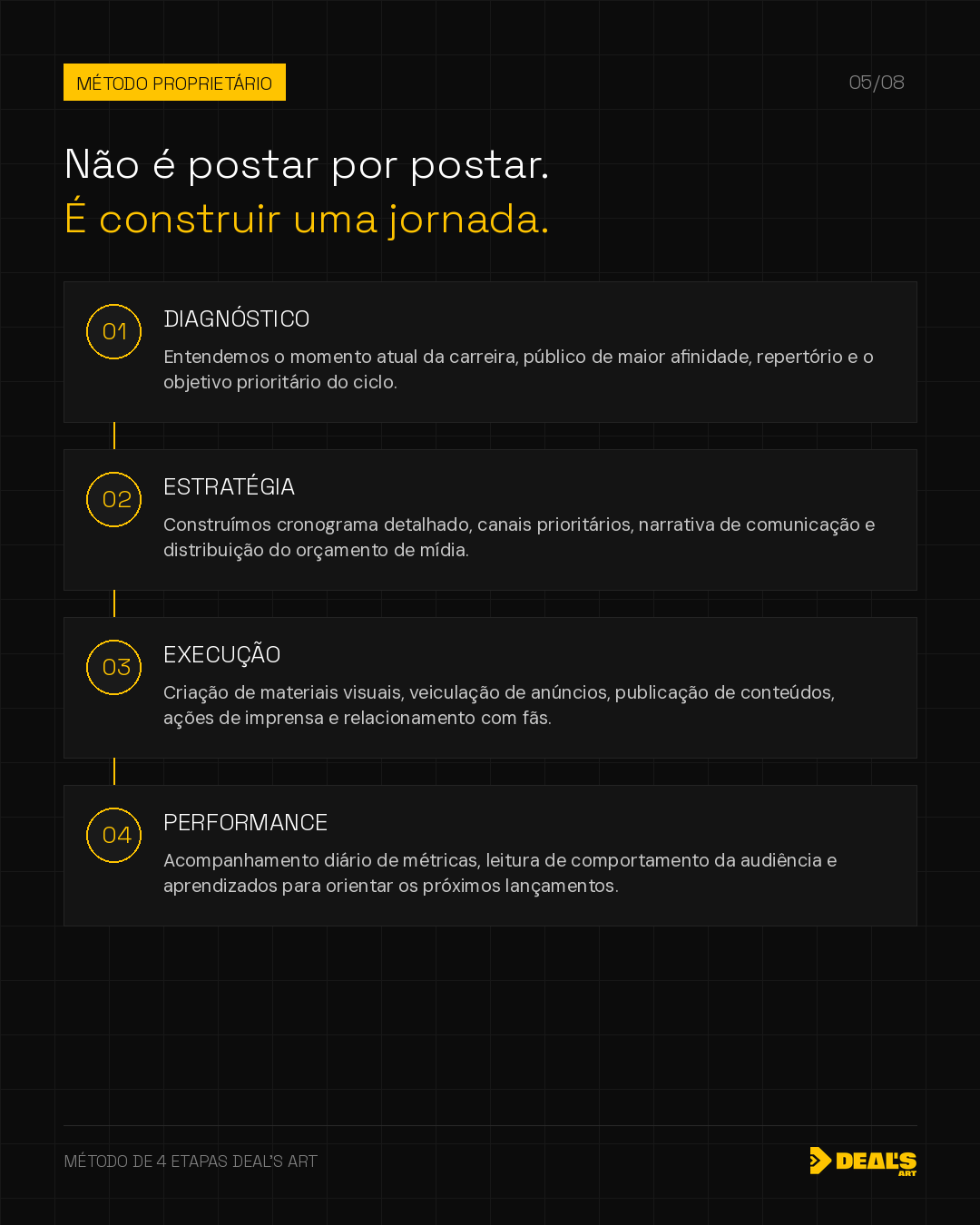
Deal's Art offers music release planning focused on implementing asset governance, defining owners and checkpoints, and configuring approval workflows and editorial calendars. We work on process documentation, team training, and partner coordination to reduce friction and increase predictability, recognizing that benefits depend on the context and joint execution. We can prepare a proposal tailored to your project’s scope and clarify limitations, costs, and the need for specialists on legal or rights-related matters. To move forward, we recommend an initial assessment of the current status of the assets and their owners.
A consistent strategy connects creation, context, and relationships. If you want to organize your next cycle with an integrated perspective, Deal's Art can help define your project priorities.
Submit my project