
The lack of a clear approval process between artist, label, and agency is one of the most common causes of release delays. When decisions are scattered across messages, deadlines are missed and costs increase. It is urgent to standardize who approves what, when, and according to which criteria to avoid rework in the final weeks before delivery. This article presents an operational workflow and a practical checklist to organize approvals and reduce risks in releases.
Initial Mapping of Responsibilities and Deliverables
The first step is to define in writing who is responsible for each deliverable: artwork, masters, metadata, press materials, videos, and campaigns. Identify the primary contact, a backup, and the internal deadlines for each item. Also document official communication channels and accepted submission formats (e.g., 24-bit WAV, PSD with covers in RGB). This mapping prevents ambiguity and makes it easier to trace decisions when questions arise.
Approval Schedule with Milestones and Lead Times
Build a reverse timeline from the release date, including all approval milestones and their minimum lead times (the time needed for review, adjustments, and integration). Set aside review windows for the artist, label, and agency, and leave buffers for technical or legal corrections. A well-defined schedule turns last-minute decisions into predictable, measurable steps.
Standardizing Feedback and Versions
Establish a single standard for receiving feedback: a comment template, platform (email, management tool, shared spreadsheet), and version naming convention. Require every change request to include a clear reason, time reference, and priority. This reduces unnecessary back-and-forth and speeds up convergence on the final version.
Risk Management and Critical Blockers
Identify the risk points most likely to cause delays, such as metadata issues, sample clearances, image rights, and problems with masters. For each risk, define a contingency procedure: the person responsible for unblocking it, a maximum resolution deadline, and a viable Plan B. Monitoring risks weekly makes it possible to mobilize resources before an issue jeopardizes the release date.
Criteria for Hiring or Handling Approval Management Professionally
When deciding to outsource approval management, look for professionals or agencies that can demonstrate documented processes, centralized communication, and version control. Ask for examples of operational workflows (without sensitive figures), tools used, response SLAs, and escalation policies. Also assess experience with labels and relevant digital formats; the more complex the project, the more important it is to integrate stakeholders and reduce friction points.
How Deal's Art Organizes Approvals Without Promising Results
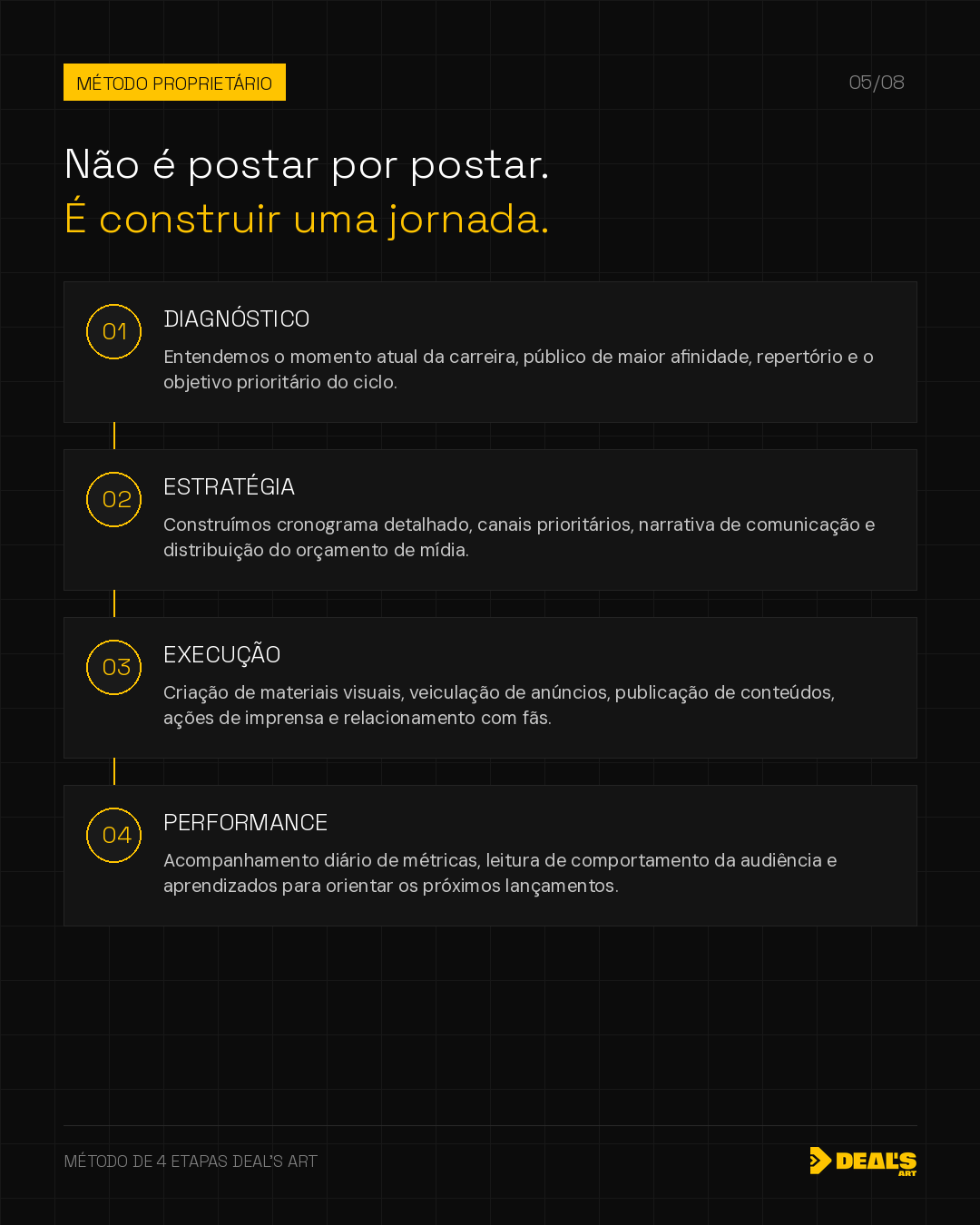
Deal's Art works on music release planning that includes mapping responsibilities, reverse timelines, standardizing feedback, and managing risks. Our proposal is to structure the process to reduce rework and make decisions between artist, label, and agency more agile. For questions about scope, price, contract, or rights, we clarify that each project requires a detailed assessment and, when necessary, we refer clients to legal or commercial specialists.
A consistent strategy connects creation, context, and relationships. If you want to organize your next cycle with an integrated view, Deal's Art can help define the project's priorities.
Present my project